
Thomas Hell
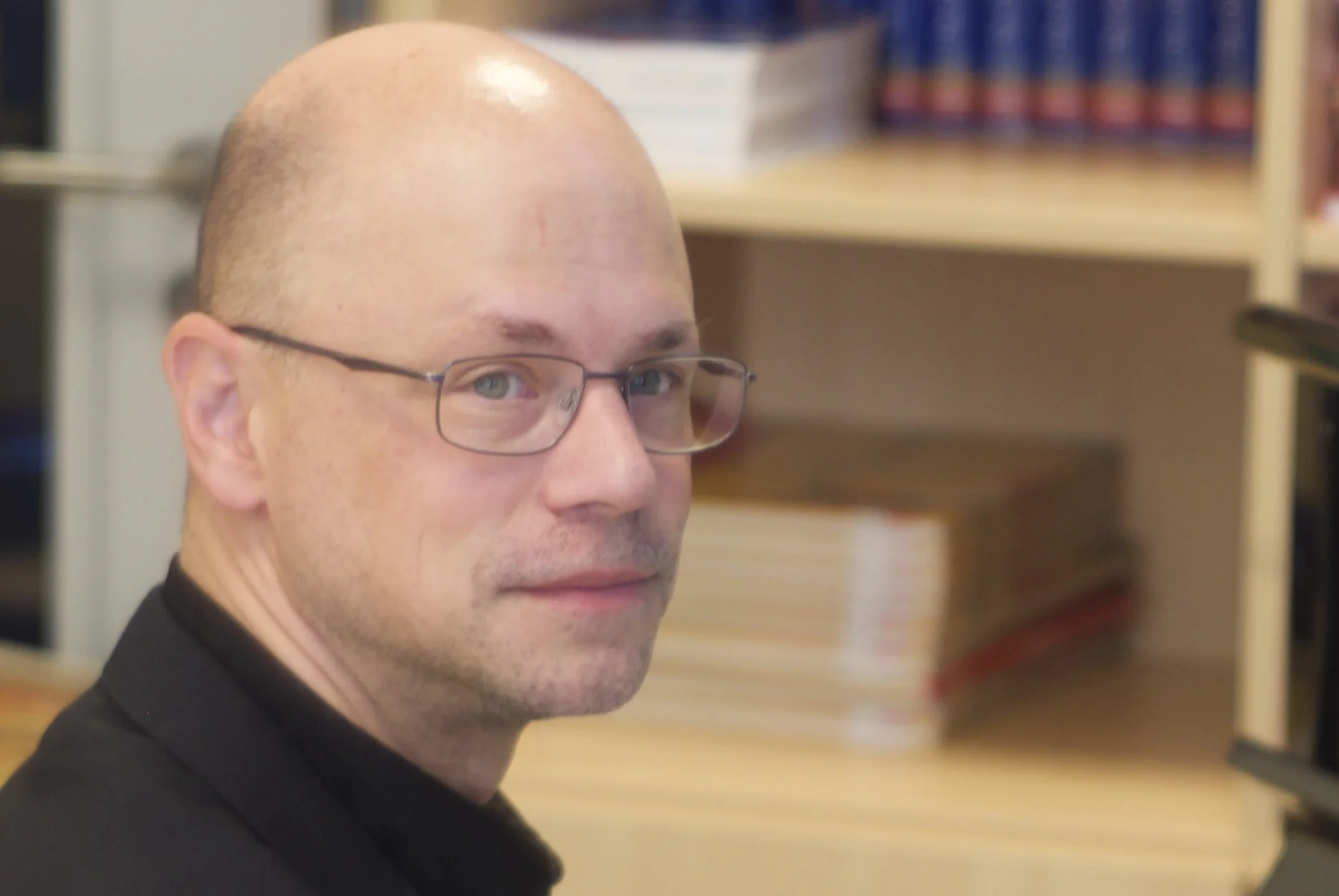
Image from Wikipedia
Image from Wikipedia
Thomas Hell – a pianist between virtuosic precision and thoughtful repertoire architecture
A German concert pianist with profile, depth, and musical breadth
Thomas Christian Friedrich Hell, born on September 22, 1970, in Hamburg, is one of the German pianists who define their artistic identity not through volume, but through substance. As a university lecturer and internationally sought-after concert pianist, he has built a reputation based on analytical sharpness, technical sovereignty, and a particularly broad stylistic range. His career combines the classical core repertoire with a pronounced focus on piano music of the 20th and 21st centuries. ([de.wikipedia.org](https://de.wikipedia.org/wiki/Thomas_Hell))
Biography: Education, influences, and artistic foundation
Thomas Hell studied at the Hochschule für Musik und Theater Hannover, where he earned his diploma as a piano pedagogue, completed the artistic maturity examination, and the concert exam in piano in the class of David Wilde. Additionally, he obtained a diploma in music theory with Reinhard Febel. This dual education is central to his artistic profile: Hell thinks about music not only pianistically but also structurally and compositionally. He received further impulses from personalities such as Erika Haase, Conrad Hansen, Klaus Hellwig, David Levine, Günter Ludwig, and Colette Zérah. ([de.wikipedia.org](https://de.wikipedia.org/wiki/Thomas_Hell))
From an early age, a career path emerged that focused on differentiation rather than mere repertoire routine. His work navigates between solo performance and chamber music, between historically rooted works and highly complex modern pieces. This openness has established Hell in the scene as a musician with extraordinary repertoire competence. The official representation describes him as a pianist who has engaged with music from “various perspectives” from the very beginning. ([schott-music.com](https://www.schott-music.com/en/person/thomas-hell?utm_source=openai))
Career path: Concerts, masterclasses, and international presence
Hell has performed throughout Europe and has also given concerts in Japan, China, and Russia. His presence at international festivals and in renowned concert halls is emphasized on official websites; he has also appeared with orchestras such as the New Japan Philharmonic, the Göttingen Symphony Orchestra, the Noordhollands Philharmonisch Orkest, and the Orchestre symphonique d’Orléans. His musical career thus clearly extends beyond the format of classical recitals, showcasing an artistic path with institutional recognition. ([schott-music.com](https://www.schott-music.com/en/person/thomas-hell?utm_source=openai))
Another core aspect of his work lies in educational activities. After teaching in Hannover and Stuttgart, Hell took up a professorship for piano and piano chamber music at the Hochschule für Musik Mainz in 2016. Additionally, he conducts masterclasses domestically and internationally, including in China, Tokyo, Aarhus, and Reykjavík, and serves as a juror in piano competitions. This combination of stage, university, and competition provides his career with a rare breadth and makes him an important reference figure for younger pianists. ([de.wikipedia.org](https://de.wikipedia.org/wiki/Thomas_Hell))
The breakthrough through repertoire: Ligeti, Ives, Bartók, and Schoenberg
Thomas Hell is particularly closely associated with works from the 20th century. Official sources highlight his complete performances of the 18 Etudes by György Ligeti as a peak of his artistic work, among others in Darmstadt, Basel, and Tokyo. His interpretation in Tokyo was selected by the Japanese magazine Ongaku no tomo as “Best Concert 2010.” Such milestones do not mark a commercial moment of popularity but an artistic breakthrough in the most demanding sense: as an interpreter with authority in a repertoire that demands the highest rhythmic control, transparency, and structural thinking. ([schott-music.com](https://www.schott-music.com/en/person/thomas-hell?utm_source=openai))
Charles Ives, Arnold Schoenberg, Luigi Dallapiccola, Pierre Boulez, and Elliott Carter also belong to the repertoire with which Hell is particularly associated, according to Schott Music and his own website. This focus indicates that he does not only act as a custodian of classical tradition but also as a mediator of modern sound languages. His profile arises precisely from this combination of pianistic craftsmanship and intellectual curiosity. ([schott-music.com](https://www.schott-music.com/en/person/thomas-hell?utm_source=openai))
Discography: carefully curated recordings with significance
Thomas Hell’s discography is deliberately slim yet notable in content. Important releases include recordings of Max Reger and Robert Schumann, a tribute to Eduard Steuermann, the Bartók violin sonatas with Adrian Adlam, the Korngold program featuring the Piano Quintet op. 15, the complete recording of the Ligeti Etudes, and the Charles Ives recording Concord Sonata. This selection reflects a clear aesthetic: Hell documents not quantity, but focus. ([de.wikipedia.org](https://de.wikipedia.org/wiki/Thomas_Hell))
Two releases in particular received notable attention. The Korngold recording won the German Record Critics' Award in the shortlist of 4/2012, along with the Pizzicato Supersonic Award and an ICMA nomination in 2013. The Steuermann CD was already awarded a special prize by the German Record Critics in 2010, while the complete Ligeti recording was released in 2012 by WERGO, further establishing Hell as a specialist in complex, modern piano music. The discography thus appears as an artistic statement: Hell does not seek the smooth mainstream but the idiomatic and interpretatively demanding terrain. ([thomashell.de](https://www.thomashell.de/deutsch/diskographie/))
Musical development and style: Intelligence, virtuosity, and sound awareness
The sources describe Hell with a formulation that succinctly summarizes his profile: Alfred Brendel praised his playing as a combination of intelligence and virtuosity. This is precisely the core of his pianistic signature. His interpretations thrive on clarity of touch, structural transparency, and the willingness to not only master the most complex scores but to deeply penetrate them musically. ([schott-music.com](https://www.schott-music.com/en/person/thomas-hell?utm_source=openai))
As a specialist in Ligeti, Hell demonstrates how technical brilliance and musical reflection intertwine. Ligeti's Études require not only finger dexterity but also a precise sense of rhythmic architecture, layers, articulation, and sonic perspective. That Hell has garnered international attention, particularly with this repertoire, aligns with his overall image: a pianist who understands composition and interpretation as an closely connected system. ([schott-music.com](https://www.schott-music.com/en/person/thomas-hell?utm_source=openai))
Cultural influence: University teaching, masterclasses, and repertoire mediation
Thomas Hell shapes the German pianist scene not only on stage but also in teaching. His professorship in Mainz and international masterclasses demonstrate a lasting cultural impact that extends beyond individual concerts. A look at his career reveals a musician who does not treat repertoire history as a museum piece but passes it on as living practice. ([de.wikipedia.org](https://de.wikipedia.org/wiki/Thomas_Hell))
His published writings and lectures also reflect this attitude. On his website, there are publications and a booklet text regarding the Ives recording; these are complemented by media contributions and an interview about his concert activities and recordings. Hell thus presents himself as a reflective artist who takes into account the categorization of his work and gives a mediating voice to the piano literature of the 20th century. ([thomashell.de](https://www.thomashell.de/deutsch/interview-ver%C3%B6ffentlichungen/?utm_source=openai))
Current projects and releases
In the found official sources and biographical entries, no clearly identified new albums or major releases from 2024 or 2025 could be pinpointed. Instead, the emphasis of his current presence remains on concert activities, masterclasses, teaching, and the ongoing reception of his existing repertoire. For an artist like Thomas Hell, relevance lies less in constantly new releases and more in the continued cultivation of a highly specialized program. ([thomashell.de](https://www.thomashell.de/?utm_source=openai))
Conclusion: A pianist with depth, character, and genuine brilliance
Thomas Hell fascinates with a rare combination of technical superiority, intellectual precision, and stylistic adventurousness. His career demonstrates how strongly an artist can resonate when committed not to quick effects but to musical substance. Those wishing to experience the special tension between classical foundation, modern complexity, and pedagogical authority should listen to Thomas Hell live. His concerts promise not just a display of virtuosity but a concentrated musical experience with lasting impact. ([schott-music.com](https://www.schott-music.com/en/person/thomas-hell?utm_source=openai))
Official channels of Thomas Hell:
- Instagram: No official profile found
- Facebook: No official profile found
- YouTube: No official profile found
- Spotify: No official profile found
- TikTok: No official profile found