
Pablo Picasso
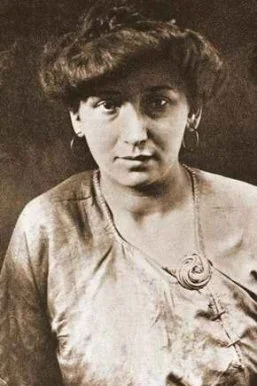
Image from Wikipedia
Image from Wikipedia
Pablo Picasso: The Radical Innovator of Modern Art
An artist who redefined the visual language of the 20th century
Pablo Ruiz Picasso is considered one of the most influential artists of modern times, leaving a lasting impact on art history through his extraordinary artistic development. Born on October 25, 1881, in Málaga and died on April 8, 1973, in Mougins, he spent most of his adult life in France and created a body of work spanning over 76 years of immense diversity. His oeuvre includes paintings, drawings, prints, collages, sculptures, and ceramics and represents a radical renewal of form, space, and expression. (en.wikipedia.org)
Early Years: Child Prodigy, Education, and Early Mastery
Picasso showed exceptional talent early on and received his first artistic training from his father, José Ruiz y Blasco, a drawing teacher and painter. Already as a teenager, he was noted for a technical prowess that far exceeded his age and passed the entrance exam for the art school in Barcelona at just 14. After further stops in Madrid and initial studies in museums and artist cafes, he developed a distinctive sense of observation, composition, and drawing precision. (goethe.de)
This early phase laid the foundation for a productivity reminiscent of a musical career in terms of relentless creative renewal: Picasso worked not linearly, but in intense creative phases that clearly differed in style, technique, and motifs. His youthful works already demonstrate a sure hand for anatomy, light management, and painterly discipline before he consciously broke away from the academic tradition. His early grounding in Spanish art and encounters with the European centers of modernity shaped his view of the possibilities of the image. (britannica.com)
The Blue Period and the Rose Period: Emotion as Visual Language
With his move to Paris, Picasso entered the artistic phase now known as the Blue Period. The death of his close friend Carlos Casagemas left a deep mark, leading to images of loneliness, poverty, and existential melancholy that coalesced in cool blue and green tones. Works like “The Old Guitarist” and “La Vie” mark this expressionistic drive, where psychological depth and stylistic condensation come together. (biography.com)
From 1904 onward, the mood of his work shifted towards the Rose Period, characterized by circus motifs, harlequins, and acrobats. These images appear lighter, more poetic, and formally more open, yet they do not lose the inner tension that defines Picasso’s art. Even here it becomes apparent how adeptly he translated moods into color, line, and composition, thus creating a visual vocabulary that oscillates between empathy and formal radicalism. (goethe.de)
Cubism: The Great Invention of a New Visual Order
The actual turning point began with Picasso’s collaboration with Georges Braque, from which Cubism emerged. Picasso reduced forms, deconstructed perspectives, and opened up a visual language in which multiple viewpoints became visible simultaneously. With “Les Demoiselles d’Avignon” from 1907, he created a key work of Classical Modernism that is still considered a break with traditional ways of seeing. (smb.museum)
Between 1907 and 1914, Picasso, together with Braque, developed analytical and later synthetic Cubism, experimenting with collages, papiers collés, and incorporating letters and everyday materials. This phase brought forth a new understanding of painting: The image was no longer seen as a window to the world but as an independent construction made up of surface, signs, and materials. The influence of this innovation extends far beyond painting and continues to shape design, graphics, stage, and visual culture today. (smb.museum)
From Neoclassicism to Surrealism: Change as a Principle
Picasso’s development was never linear; rather, it consisted of a constant interplay between reliance on tradition and reinvention. After World War I, he temporarily turned to classical forms, later opening himself to surrealist impulses and combining various stylistic registers within a single visual world. It is precisely this ability to blend opposing aesthetic languages that made him one of the most complex figures in 20th-century art. (en.wikipedia.org)
The diversity of his oeuvre is extraordinary: Picasso worked as a painter, printmaker, sculptor, and ceramist, leaving a body of work that defies simple categorization. According to available sources, his production includes tens of thousands of works and shows an artist who constantly questioned material, technique, and motifs. This productivity lent his artistic development an almost eruptive energy that continues to engage critics and historians today. (goethe.de)
Guernica, the Peace Dove, and Political Consciousness
In 1937, “Guernica” was created, one of the most significant anti-war paintings of modernity. The work responds to the bombing of the Basque town of Guernica during the Spanish Civil War, condensing horror, grief, and moral accusation into a monumental visual composition. Few other works of the 20th century have unleashed a comparable historical and emotional impact. (goethe.de)
In 1944, Picasso joined the French Communist Party and designed the dove motif for the Paris World Peace Congress in 1949, which became a worldwide symbol of peace. In doing so, he connected his art with a clear political stance while not sacrificing the formal autonomy of his work. It is this connection between aesthetic innovation and cultural commentary that strengthens his status as an authoritative figure of modernity. (goethe.de)
Reception, Influence, and Museum Presence
Picasso was exhibited during his lifetime in the most significant museums in the world and is prominently represented in collections in Paris, Barcelona, and Madrid. The Museu Picasso in Barcelona and the Musée Picasso in Antibes were established during his lifetime and document the early museum canonization of his work. His presence in the major art museums of Europe and the world underscores his status as a reference point in art history. (en.wikipedia.org)
The critical reception of his work remains intense to this day, as Picasso not only created masterpieces but also changed the conditions of seeing. His art challenges research, interpretation, and curatorial classification, as it uniquely combines tradition, rupture, experimentation, and self-correction. This is precisely where his lasting cultural relevance lies: Picasso is not a completed myth but a continually relevant reference point for any debate about modernity, form, and artistic freedom. (britannica.com)
Current Projects and Publications
Since Pablo Picasso died in 1973, there are no current albums, singles, tours, or new music projects. Instead, his work remains alive through exhibitions, research, museum presentations, and publications. His "publications," in the artistic sense, now consist of the ongoing reception, contextualization, and public visibility of his works. (en.wikipedia.org)
Conclusion: Why Pablo Picasso Continues to Fascinate
Pablo Picasso fascinates because he not only accompanied the visual language of modernity but also shaped it decisively. His career fuses technical brilliance, stylistic risk-taking, and cultural impact into a body of work of extraordinary density. Those who view Picasso do not encounter a static canon but an inexhaustible artistic development that continually opens new perspectives on form, feeling, and history. (en.wikipedia.org)
A visit to his works in a museum or an in-depth engagement with his key phases of work reveals why Picasso is one of the central figures of the 20th century. His images remain intense, challenging, and immediately present. For that reason, it is worthwhile to rediscover him repeatedly. (britannica.com)
Official Channels of Pablo Picasso:
- Instagram: No official profile found
- Facebook: No official profile found
- YouTube: No official profile found
- Spotify: No official profile found
- TikTok: No official profile found
Sources:
Upcoming Events
Lecture: From Velázquez to Manet – Pablo Picasso's Variations on Old Masters
Barcelona Moderna – From Gaudí to Picasso