
Jiggs Whigham
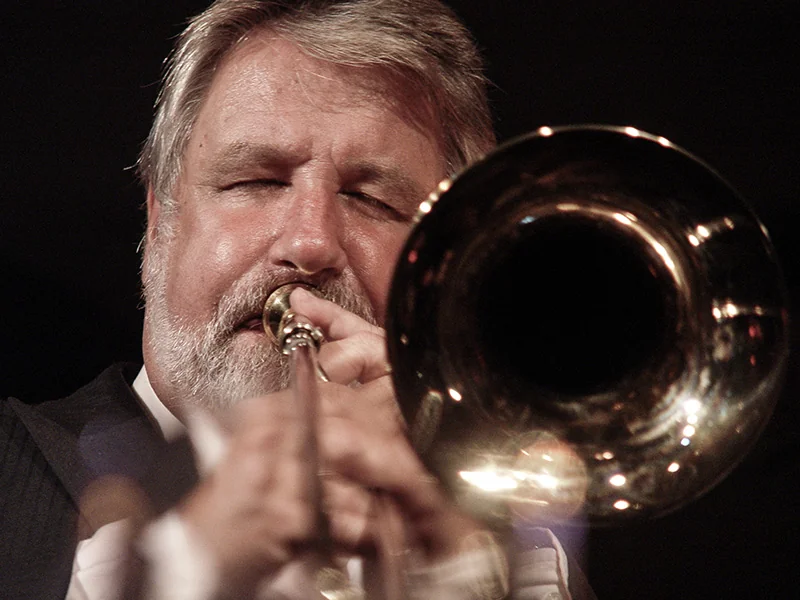
Image from Wikipedia
Image from Wikipedia
Jiggs Whigham – the Elegant Architect of Modern Jazz Trombone Sound
A Master of Warm Tones, Big Band Tradition, and Jazz Education
Jiggs Whigham is one of those musicians whose name is immediately associated with stylistic sovereignty, orchestral authority, and an exceptionally long music career. Born in 1943 in Cleveland, Ohio, the trombonist, bandleader, and educator developed a sound described as large, warm, and smooth, shaping the European and international jazz scene for decades. His career connects the history of American jazz with institutional development in Germany and Europe. ([jiggswhigham.com](https://jiggswhigham.com/?page_id=9&utm_source=openai))
From Young Talent in Cleveland to International Jazz Professional
Oliver Haydn Whigham III, as Jiggs Whigham is known in private life, grew up in the United States and was given the nickname “Jiggs” by his grandfather at an early age. By the age of 17, he became the solo trombonist in the Glenn Miller Orchestra, and just two years later, he held the same position in Stan Kenton's orchestra. These early stages mark his entry into the top tier of American big band jazz, explaining why Whigham was regarded as a musician with exceptional stage presence and high stylistic maturity from a young age. ([jiggswhigham.com](https://jiggswhigham.com/?page_id=9&utm_source=openai))
After working in New York City studios and Broadway musicals, Whigham moved to Germany in 1965 to work with the Kurt Edelhagen Orchestra of WDR in Cologne. This marked the beginning of a phase in which the American jazz talent became a European institution. From then on, his musical development combined American swing tradition with the openness of European modern jazz, significantly shaping his tone, phrasing, and role as a soloist. ([de.wikipedia.org](https://de.wikipedia.org/wiki/Jiggs_Whigham?utm_source=openai))
The Breakthrough in Europe: Orchestras, Ensembles, and Artistic Authority
A significant career step was winning first prize at the Modern Jazz Competition in Vienna in 1966. In the following years, Whigham played with notable formations and became a sought-after soloist in the large ensemble context. By the end of the 1970s, he co-founded the group Trombone Summit with Bill Watrous, Albert Mangelsdorff, and Kai Winding, a project that impressively brought the sound of the trombone to the forefront as a standalone soloist voice. ([de.wikipedia.org](https://de.wikipedia.org/wiki/Jiggs_Whigham?utm_source=openai))
His work with Peter Herbolzheimer's Rhythm Combination & Brass, with which he has been associated since the 1970s, was particularly formative. He also regularly collaborated with the George Gruntz Concert Jazz Band, becoming part of a generation that not only played European jazz but actively developed its form language. The combination of soloistic brilliance, arranging practice, and orchestral thinking established Whigham as one of the most reliable architects of the modern big band sound. ([de.wikipedia.org](https://de.wikipedia.org/wiki/Jiggs_Whigham?utm_source=openai))
Discography: Influential Recordings between Swing, Modern Jazz, and Big Band
Whigham's discography reflects not a short-term hype but a steady artistic consolidation over decades. His early solo albums include Values from 1971 and Hope from 1976, followed later by The Jiggs Up (1989) and Jiggs & Gene (1996). These recordings document his journey from a virtuosic single-voice player to a reflective band conceptualizer, balancing timbres, forms, and improvisation. ([de.wikipedia.org](https://de.wikipedia.org/wiki/Jiggs_Whigham?utm_source=openai))
A significant part of his oeuvre is created in collaboration with large orchestras and historical jazz figures. AllMusic and his official website feature numerous credits with Stan Kenton, Bud Shank, Carl Fontana, Paul Kuhn, the hr-Bigband, the WDR Big Band, and the Federal Jazz Orchestra. This discography portrays Whigham as a musician who cannot be reduced to the role of a soloist but works as a conductor, arranger, music educator, and sound designer. ([allmusic.com](https://www.allmusic.com/artist/jiggs-whigham-mn0000328948))
Musical Language: Warm Tone, Flexible Phrasing, and Orchestral Thinking
His trombone playing is characterized by a large, warm tone and a flexible phrasing style. This blend creates an impression of control without coldness, of technical security without a demonstrative gesture. In jazz circles, Whigham is regarded as a musician who does not pit swing, ballad culture, and big band energy against each other but rather uses them as an interconnected vocabulary. ([de.wikipedia.org](https://de.wikipedia.org/wiki/Jiggs_Whigham?utm_source=openai))
His expertise is also evident in his understanding of arrangement and repertoire. Recordings like The Third Stone with the WDR Big Band or later works with the BBC Big Band and the Berlin jazz scene demonstrate that Whigham not only knows the language of large ensembles from the inside but can also convey it pedagogically and structurally. This dual role as a performing musician and orchestral thinker is a hallmark of his identity. ([de.wikipedia.org](https://de.wikipedia.org/wiki/Jiggs_Whigham?utm_source=openai))
The Educator: Influence on Universities and Jazz Education
A crucial part of Whigham's significance lies in jazz education. Beginning in 1979, he led the jazz department at the Hochschule für Musik in Cologne, later serving as a professor and head of the popular music department at the Hochschule für Musik "Hanns Eisler" Berlin and its jazz institute. In retrospect, he is considered one of the key figures who permanently established jazz in German universities. ([de.wikipedia.org](https://de.wikipedia.org/wiki/Jiggs_Whigham?utm_source=openai))
Additionally, he worked as the director of the big band at the University of Siegen, chief conductor of the RIAS Big Band Berlin, and musical director of the Federal Jazz Orchestra. Currently, he continues his work as conductor of the BBC Big Band, artistic director of the Berlin Jazz Orchestra, musical director of the LaJJOB, and artistic director of BUJAZZO through the international scene. Thus, he remains not only a historical name but a living force in the present of jazz. ([de.wikipedia.org](https://de.wikipedia.org/wiki/Jiggs_Whigham?utm_source=openai))
Current Projects and Recent Activities
Even in recent years, Whigham's presence is evident on stages, in workshops, and in youth education formats. His official schedule for 2024 lists, among other things, the International Big Band Festival in Bonn, an improvisation project at Gutenberg University Mainz, a big band workshop in Mannheim, an international jazz and big band program in Imatra, as well as various other international workshop and concert formats. This clearly indicates that his artistic development remains closely tied to communication and nurturing of young talent. ([jiggswhigham.com](https://jiggswhigham.com/?date1=2024&page_id=47&utm_source=openai))
Additionally, the official website highlights the Jiggs Whigham International Trio with Florian Weber and Decebal Badila. The formation expresses a recurring artistic impulse: seeking chamber music tension in a sleek, open setting alongside large orchestras. This quality encapsulates the modernity of his later works. ([jiggswhigham.com](https://jiggswhigham.com/?page_id=260&utm_source=openai))
Cultural Influence and Authority in the Jazz Landscape
Whigham's significance extends far beyond individual albums. AllMusic describes him as a versatile and important trombonist, who, while not always given full recognition, has carved out a distinctive position, particularly through his long work in Germany. This assessment fits the profile of a musician who is stylistically elegant, institutionally effective, and historically well-connected. ([allmusic.com](https://www.allmusic.com/artist/jiggs-whigham-mn0000328948))
His influence is also evident in the connection between performance, pedagogy, and publishing work. His website lists books like Jazz Trombone and Basic Steps, along with references to play-along materials and other teaching works. This makes clear that Whigham embodies not only musical tradition but also systematically imparts knowledge, thus shaping the next generation of jazz trombonists. ([jiggswhigham.com](https://jiggswhigham.com/?page_id=9&utm_source=openai))
Voices from the Scene and Reception
The reception of his work is clear from sources in jazz press, archives, and specialized portals: Whigham is described as an experienced orchestra leader, soloist, and jazz educator, whose position is particularly extraordinary in the European arena. His recording projects, roles in major radio orchestras, and presence in the discographies of other significant musicians paint the picture of an artist with enormous networking and high professional authority. ([de.wikipedia.org](https://de.wikipedia.org/wiki/Jiggs_Whigham?utm_source=openai))
Conclusion: Why Jiggs Whigham Continues to Fascinate Today
Jiggs Whigham is exciting because his career embodies American jazz history, European orchestral culture, and high-level academic development. His warm tone, elegant phrasing, and ability to shape large ensembles with a distinctive signature make him one of the central figures in jazz trombone. For those who love jazz, his work reveals not only virtuosity but also attitude, history, and pedagogical foresight. Experiencing him live means listening to a musician who understands jazz not as a snapshot but as a living art form. ([jiggswhigham.com](https://jiggswhigham.com/?page_id=9&utm_source=openai))
Official Channels of Jiggs Whigham:
- Instagram: no official profile found
- Facebook: no official profile found
- YouTube: no official profile found
- Spotify: no official profile found
- TikTok: no official profile found
Sources:
- Jiggs Whigham – Official Website, Biography
- Jiggs Whigham – Official Website, Tour Dates
- Jiggs Whigham – Official Website, Trio
- Jiggs Whigham – Official Website, Discography
- AllMusic – Jiggs Whigham Biography and Credits
- Wikipedia – Jiggs Whigham
- German Music Council – Yearbook 2024
- Wikipedia: Image and text source