
Frédéric Chopin
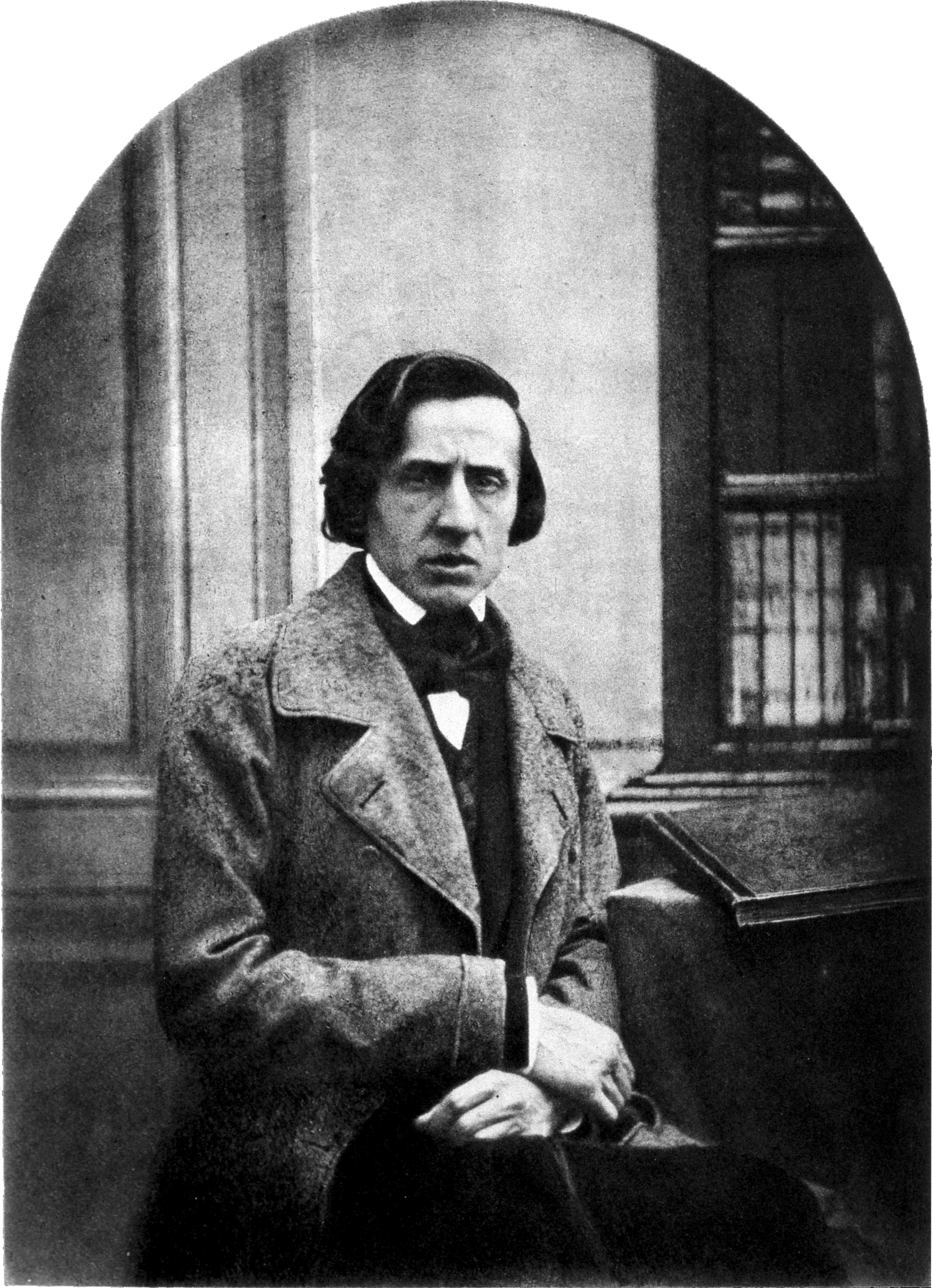
Image from Wikipedia
Image from Wikipedia
Frédéric Chopin – The Poetic Revolutionary of the Piano
A Century Composer Between Romanticism, Nostalgia for Home, and Piano Ideal
Frédéric Chopin is considered one of the most influential figures in the history of romantic music. The Polish-French composer and pianist was born in 1810 in Żelazowa Wola and spent the first half of his short life in Poland before leaving his homeland in 1830 and living predominantly in France from 1831 onwards. His biography is inseparably linked with the piano: Chopin composed almost exclusively for this instrument, shaping a sound language that is still regarded as the epitome of lyrical piano art. ([chopin.at](https://www.chopin.at/ueber-chopin/?utm_source=openai))
Childhood, Education, and Early Talent
Chopin grew up in an educated, music-oriented family, with his father from France and his mother from Poland. His extraordinary talent was evident from an early age; he received his first piano lessons at the age of six, and his musical education in Warsaw laid the foundation for a career that quickly grew beyond local boundaries. In Warsaw, he composed his first pieces and emerged as a child prodigy admired in noble salons for his improvisational skills. ([chopin.at](https://www.chopin.at/ueber-chopin/?utm_source=openai))
This early influence was more than just a tale of talent. It shaped an artistic identity, where technical brilliance, lyricism, and emotional nuance converged. Even at a young age, Chopin connected the tradition of the classical school with a distinctive poetic signature that would later become his trademark. ([chopin.at](https://www.chopin.at/ueber-chopin/?utm_source=openai))
Departure to Paris: The International Breakthrough
Chopin left Poland in 1830 and settled in France from October 1831, where he lived until his death in 1849. Paris became his most important base and simultaneously the resonance chamber of his art: In the salons of the city, he unfolded his legendary ability for free improvisation, from which new compositions often emerged. There, he established himself as a pianist of extraordinary sensitivity and as a composer whose music immediately attracted the attention of the cultural elite of the capital. ([chopin.at](https://www.chopin.at/ueber-chopin/?utm_source=openai))
His success in Paris was not based on spectacular virtuoso posturing but on a novel aesthetic of sound. Chopin cultivated a fine, breathing touch, expanded the sonic possibilities of the piano, and shaped a pianistic language that is still regarded as a benchmark today. This connection of intimate expressiveness and formal control made him one of the leading musicians of his time. ([en.wikipedia.org](https://en.wikipedia.org/wiki/Fr%C3%A9d%C3%A9ric_Chopin?utm_source=openai))
Compositional Handwriting: The Piano as a World
Chopin's work is almost entirely dedicated to the piano. His music combines elements of Polish folk music, the classical traditions of Bach, Mozart, Weber, Hummel, and Schubert, as well as strong influences from Belcanto, particularly the Italian operatic style of Vincenzo Bellini. From this mixture emerged a tonal language in which melody, harmony, rhythm, and form were reimagined in highly individual ways. ([chopin.at](https://www.chopin.at/ueber-chopin/?utm_source=openai))
His innovative power is particularly evident in his approach to the instrument itself. Chopin used the pedal and fingerings in previously unfamiliar ways, emphasized natural movements, and rejected mechanical practice devoid of musical content. His pedagogical ideas, including an emphasis on singing and a rejection of hard, "percussive" touches, are still considered fundamental in piano pedagogy today. ([en.wikipedia.org](https://en.wikipedia.org/wiki/Fr%C3%A9d%C3%A9ric_Chopin?utm_source=openai))
Important Works and Discographic Relevance
Among Chopin's best-known genres are Nocturnes, Études, Préludes, Ballades, Scherzi, Mazurkas, Polonaises, Waltzes, and the two Piano Concertos. His works form a core repertoire of international concert programs and appear in countless recordings, ranging from historically informed interpretations to highly romantic readings. The ongoing release of new recordings and editions shows that Chopin's music is more vibrant than ever in the 21st century. ([en.wikipedia.org](https://en.wikipedia.org/wiki/Fr%C3%A9d%C3%A9ric_Chopin?utm_source=openai))
The discography surrounding Chopin also remains a significant reflection of interpretation history. The spectrum ranges from canonical recordings to current reissues, and public interest in his works continues unabated. Even modern programs and label releases regularly draw on Chopin's repertoire, underscoring his status as a central reference point in piano literature. ([allmusic.com](https://www.allmusic.com/artist/frederick-chopin-mn0000066824?utm_source=openai))
Style, Emotion, and National Identity
Chopin's music is deeply rooted in Polish culture, without ever being reduced to folklore in a superficial sense. His Mazurkas and Polonaises carry the stylistic memory of a homeland he would never see again after 1830, making national identity an artistic principle. This fusion of personal nostalgia and formal sophistication gives his work an extraordinary emotional density. ([chopin.at](https://www.chopin.at/ueber-chopin/?utm_source=openai))
As a romantic, Chopin stood alongside a generation of composers like Schumann, Liszt, and Mendelssohn, yet his musical language remained unmistakable. Where others favored grand gestures, he distilled emotion into the smallest rhythmic and harmonic shifts. This art of nuance makes him a master of the inner life, whose music whispers rather than declaims, thus achieving maximum impact. ([fr.wikipedia.org](https://fr.wikipedia.org/wiki/Fr%C3%A9d%C3%A9ric_Chopin?utm_source=openai))
Teaching, Influence, and Aftermath
Chopin was not only a composer and pianist but also an influential piano teacher. His ideas on sound culture, agogics, articulation, and technical economy shaped generations of pianists and remain central to modern piano pedagogy. His rejection of purely mechanical practice and focus on musical intelligence mark him as a modern educator, long before that term became commonplace in music schools. ([en.wikipedia.org](https://en.wikipedia.org/wiki/Fr%C3%A9d%C3%A9ric_Chopin?utm_source=openai))
His influence extends far beyond the classical tradition. Chopin's music became a benchmark for pianistic ability, a source of inspiration for composers, and the emotional backbone of many concert programs. The continuous presence of his works in recordings, radio broadcasts, and festival programs demonstrates that his art has not become museum-like but continues to serve as a living standard for expression, style, and technical proficiency. ([radiomonitor.fr](https://www.radiomonitor.fr/artiste/frederic-chopin?utm_source=openai))
End of Life and Lasting Aura
Chopin's life was overshadowed by illness. He died in 1849 at the age of 39 in Paris, likely due to complications from tuberculosis, which ultimately led to pericarditis. The fact that such a short life produced such a lasting body of work is one of the great paradoxes of music history and explains part of his enduring fascination to this day. ([en.wikipedia.org](https://en.wikipedia.org/wiki/Fr%C3%A9d%C3%A9ric_Chopin?utm_source=openai))
It is precisely the connection between vulnerability and artistic sovereignty that makes Chopin one of the most fascinating figures of Romanticism. His music is not loud but concentrated; not monumental, but ethereal; not cool, but glowing with precision. Those who listen to Chopin encounter a sound world in which the piano speaks, sings, and breathes. ([chopin.at](https://www.chopin.at/ueber-chopin/?utm_source=openai))
Conclusion: Why Frédéric Chopin Continues to Inspire
Frédéric Chopin remains captivating because he transformed the piano into an instrument of nuanced expression. His music weaves together national memory, romantic sentiment, and technical innovation into a rare artistic unity. Experiencing his works live confronts the listener not only with a composer but with an entire aesthetic of listening, where every note carries meaning. ([chopin.at](https://www.chopin.at/ueber-chopin/?utm_source=openai))
A concert featuring Chopin's music is always an encounter with an ideal: sonically beautiful, deeply emotional, and marked by high intelligence in every phrase. For this reason alone, it is worthwhile to hear his works on stage, where the intimate power of his compositions has its greatest effect. Chopin remains a must-see for all who wish not only to hear piano music but to truly understand it. ([en.wikipedia.org](https://en.wikipedia.org/wiki/Fr%C3%A9d%C3%A9ric_Chopin?utm_source=openai))
Official Channels of Frédéric Chopin:
- Instagram: No official profile found
- Facebook: No official profile found
- YouTube: No official profile found
- Spotify: No official profile found
- TikTok: No official profile found
Sources:
- International Chopin Society in Vienna – About Frédéric Chopin
- International Chopin Society in Vienna – Official Website
- Wikipedia – Frédéric Chopin
- AllMusic – Frédéric Chopin Biography & Discography
- Apple Music – Frédéric Chopin Artist Page
- Fryderyk Chopin Institute – Biography / Calendar
- International Chopin Society in Vienna – Press
- Wikipedia: Image and text source