
Mainz
Gaustraße, 55116 Mainz, Deutschland
Gautor Mainz | History & Parking
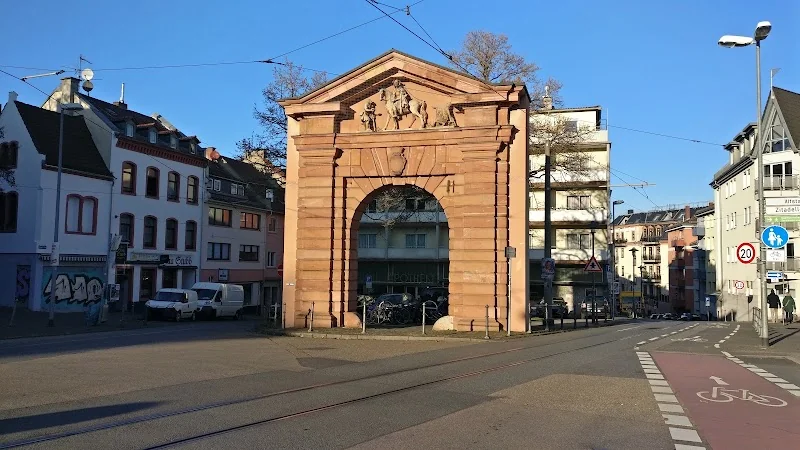
The Gautor in Mainz is more than a city gate: It is a prominent landmark between the old town, upper town, and Gaustraße, a piece of visible city history, and a place where the past, traffic, and everyday life intersect today. Those who walk up the narrow, steep Gaugasse from Schillerplatz will stand in front of the restored Baroque gate after just a few minutes, which the state capital describes as one of its most significant landmarks. The Gautor is one of the best-preserved medieval gate structures of the Mainz city fortifications and historically served as both a watch station and a customs station for trade routes. At the same time, the location on Gaustraße shows why the gate is still so present today: It marks a transition from the bustling city center to a district with history, sightlines, gastronomy, and short distances. Today, the Gautor is located at the intersection of Kästrich / Eisgrubweg, right in an area that is excellent for a walk, a trip by bus and train, or a detour into the Mainz city center. ([mainz.de](https://www.mainz.de/angebote-entdecken/zu-gast-in-mainz/sehenswertes/gautor))
Gautor Mainz: History and Significance of the Baroque City Gate
The history of the Gautor does not begin with the current building from 1670. The Mainz city side describes the predecessor structure as a three-gate, towered Gaupforte, which formed the most important connection from the city to the Gau, i.e., the surrounding area, since the Middle Ages. This explains the name: The Gautor was the gateway to the countryside, the connection between the fortified city and the open land. The official representation also points out that the gate is a stone witness to the turbulent history of Mainz. This historical depth makes the place interesting for visitors who are not only looking for a beautiful photo motif but also want to understand how Mainz functioned as a fortress and trading city. The gate was never just decoration but part of a system of protection, control, and movement: Anyone wanting to enter or exit passed through a central urban threshold. Today, this threshold is still discernible, even though the modern city life around it has long since changed. ([mainz.de](https://www.mainz.de/angebote-entdecken/zu-gast-in-mainz/sehenswertes/gautor))
Particularly formative are the historical turning points that the Gautor has survived. The city cites several significant dates for the development of the site: In 1462, the troops of Adolph II of Nassau broke into the city through the Gaupforte, ending the cathedral feud with the Archbishop of Mainz, Diether von Isenburg. In 1631, Swedish troops under King Gustav Adolf entered, followed by the French Revolutionary army in 1792 and 1799. By the end of the 19th century, the gate, along with the fortress wall, was considered a traffic obstruction; in 1896, the structure was demolished, and the ditch in front of it was filled in. That the Gautor was nevertheless preserved is mainly due to the protests of the population. Later, the gate was initially located in the courtyard of the current Frauenlob Gymnasium, from 1962 in the green space at Fichteplatz, and only returned to the vicinity of its original location in 1998. The restoration and relocation were financed, among other things, by donations from Schott Glas and Mainz citizens. Since 2002, a copy of Saint Martin with two beggars has been back on top; the original is now in the Landesmuseum Mainz. This sequence of destruction, rescue, and return is an essential part of the fascination of the Gautor. ([mainz.de](https://www.mainz.de/angebote-entdecken/zu-gast-in-mainz/sehenswertes/gautor))
Getting to Gautor Mainz: Tram, Bus, and Current Traffic Situation
Those wishing to visit the Gautor can easily reach the site using public transport. The Mainz city and transport pages name the stop Am Gautor as a central connection; according to the city, lines 50, 52, 53, 78, 653, 654, and 660 stop there. Additionally, the Eisgrubweg stop is served by lines 70 and 71. This is practical for visitors because the Gautor is well connected from both the city center and the southern and eastern city areas. The official location information of the Gautor itself sensibly complements this connection: Gaustraße, intersection Kästrich / Eisgrubweg, 55116 Mainz. Those arriving on foot will already experience the walk as part of the outing, as the Gaugasse is narrow and steep and leads directly from Schillerplatz up to the gate. This very path is a good entry point if one wants to feel the historical character of the surroundings. ([mainz.de](https://mainz.de/vv/produkte/bauamt/stadtgrundkarte-auszug-beantragen?utm_source=openai))
The tram is also a central topic around the Gautor. The IG Gaustraße describes Gaustraße as one of the oldest trade routes in Mainz and points out that the tram line is considered the steepest route in Europe without technical support. This peculiarity is not only exciting for public transport enthusiasts but also explains why the connection to the Gautor is so often sought after. At the same time, one should keep an eye on the current traffic situation during trips: The city of Mainz refers to its mobility atlas with real-time information and construction site notices for Mainz and the surrounding area. Mainz Mobility also currently informs about track renovations and detours in the Oberstadt and Hechtsheim areas; trips to Am Gautor may be rerouted or shortened depending on the situation, and lines 50, 53, 52, and 59 may be affected. Therefore, it is always worthwhile to take a quick look at the current traffic situation for a spontaneous arrival, especially if traveling by bus or train in the afternoon, on weekends, or during construction phases. ([mainz.de](https://www.mainz.de/verzeichnisse/vereinsverzeichnis/ig-gaustrasse.php))
Parking at Gautor Mainz and in the Surrounding Neighborhoods
When it comes to parking, the Gautor is clearly integrated into Mainz's city center logic. The official city page for the shopping district Schillerplatz / Ludwigsstraße / Gaustraße lists the parking garages Schillerplatz, Theater, and Karstadt, as well as parking spaces on Große Langgasse. This is particularly helpful for visitors because the Gautor is located in exactly this urban structure, and one can plan the short walk to the gate or into Gaustraße from there. Therefore, those who do not need to park directly on-site should rather use one of the central city center parking garages and enjoy the last minutes on foot. This is usually more relaxing than searching in the narrow streets around the upper town and has the advantage that one experiences the walk to the Gautor as a small city tour. The city also generally refers to its traffic situation page and mobility atlas, so one can check before departure if there are traffic jams, construction sites, or detours in Mainz. ([mainz.de](https://www.mainz.de/angebote-entdecken/einkaufen/einkaufsviertel))
For those who want to connect the old town with the Gautor, it is worth taking a look at the other parking garages mentioned by the city in the adjacent neighborhoods. In the old town, Mainz lists, among others, Karstadt, Südbahnhof/CineStar, and Fort Malakoff Park. This information is useful if one wants to combine the visit to the Gautor with a stroll through the old town, a restaurant visit, or further stops like St. Stephan and Schillerplatz. Especially because Gaustraße and the surroundings of the Gautor are steep and urban, parking in the official parking garages is often the most practical solution. For guests with limited mobility, it may also be advisable to check city maps and traffic information in advance and choose a route that keeps the walking distance as short as possible. The Gautor is not an isolated place in the green meadow but part of a developed city center structure. Considering this when parking saves time and usually leads to a more relaxed arrival. ([mainz.de](https://www.mainz.de/angebote-entdecken/einkaufen/einkaufsviertel))
Gaustraße, Schillerplatz, and the Neighborhood Around the Gautor
The true strength of the Gautor lies not only in the gate itself but in the urban neighborhood that frames it. The IG Gaustraße describes the street as one of the oldest trade routes in Mainz, whose origin dates back to the Roman foundation of the city. Today, Gaustraße is known for its high density of art, enjoyment, and lifestyle; the city even refers to it as the Montmartre of Mainz. This comparison is not just a pretty image but points to the mix of studios, crafts, small shops, gastronomic offerings, and a vibrant neighborhood. Therefore, those visiting the Gautor do not just get a pure monument experience but an authentic impression of a district where historical building substance and modern neighborhood life are closely intertwined. This is an important reason why so many search queries are made not only for the gate itself but also for Gaustraße, street, maps, or directions: The Gautor serves as a landmark, meeting point, and starting point for further discoveries. ([mainz.de](https://www.mainz.de/verzeichnisse/vereinsverzeichnis/ig-gaustrasse.php))
The official Mainz shopping district Schillerplatz / Ludwigsstraße / Gaustraße also confirms this urban quality. It states that there are additional specialty shops in Gaustraße leading up to St. Stephan's Church, and that there are small gift shops, cozy cafés, a bookstore, various gastronomic offerings, galleries, and much more. For the visit to the Gautor, this means: The walk from Schillerplatz upwards is not just a path to the attraction but a small city stroll through one of the most interesting neighborhoods in the city center. Especially the combination of narrow, steep alley, historic city gate, and subsequent view of the neighborhood adds to the charm. Those interested in photo motifs will also find strong lines and contrasts here: the Baroque gate, the elevated location, the historical street layout, and the vibrant environment with trade and gastronomy. The Gautor is thus an ideal example of how Mainz not only preserves its history but also integrates it into everyday life. ([mainz.de](https://www.mainz.de/angebote-entdecken/einkaufen/einkaufsviertel))
Gautor Mainz Restaurant, Menu, and Culinary Queries
Many search queries regarding Gautor Mainz target not only the historic city gate but also gastronomy. It is important to distinguish clearly: The historic Gautor is a monument, while the former Gautor Restaurant & Café was a separate establishment in direct proximity. The official website of the restaurant lists the address Gaustraße 2, describes regional cuisine with Mediterranean flair, and a terrace directly in front of the historic Mainz Gautor. At the same time, it is clearly stated that the restaurant has been closed indefinitely since December 29, 2025. Therefore, anyone searching for Gautor Mainz Restaurant today will primarily find this current status message on the official site. For SEO and user intent, this is still relevant because it explains why the term restaurant is associated with the location and why many people search for menu, opening hours, or reservations. The historical and gastronomic significance overlap directly in the name and location. ([gautor-mainz.info](https://www.gautor-mainz.info/))
In addition, there is another clearly verifiable gastronomic hit in the Mainz area with Gautor Korea. The online available PDF menu shows Korean dishes such as Bulgogi, Bibim-Bab, Yuk Gae Jang, Bul-Dak, Sam-Gyub-Sal Kimchi Bok, Jap-Chae Bab, Yang Nium Ori, and more. The evening menu additionally explains side dishes, soup, rice, and typical combinations. For keyword searches around Gautor Mainz menu or Gautor Korea Mainz menu, this is particularly useful because there is indeed a current menu basis available. The menu also proves that the search for culinary offerings around the Gautor is not limited to classic German or Mediterranean cuisine but also leads to Asian, particularly Korean offerings in Mainz. Therefore, those who mean not the monument itself but the culinary search intent should distinguish between the historic Gautor, the former restaurant at the gate, and the Korean restaurant in Mainz-Oberstadt. This distinction provides better orientation and avoids misunderstandings during the search. ([gautor-korea.de](https://gautor-korea.de/pdf/speisekarte.pdf))
Construction Sites, Traffic Situation, and Practical Tips for the Visit
Especially because the Gautor is located at a densely urban and traffic-important spot, construction sites and detours play a recurring role. The city of Mainz refers to its mobility atlas, which displays the current traffic situation and additional construction site information for Mainz and the surrounding area. Mainz Mobility concurrently documents the specific adjustments in the line network, such as detours and shortened trips in the Oberstadt and Hechtsheim areas. For trips to Am Gautor, this may mean that buses are routed through other stops or that individual tram lines only run to certain points. Therefore, those planning a visit should not only look at the classic stop question but also at the current traffic status on the day of the visit. This is especially true if traveling with several people, having a fixed appointment, or wanting to combine the way to the Gautor with a city stroll. ([mainz.de](https://www.mainz.de/angebote-entdecken/mobiliaet-und-verkehr/verkehrslage))
For the actual visit, the combination of history and city life is the greatest advantage of the Gautor. The gate stands near its original location, makes an important layer of Mainz city history visible, and is also in immediate proximity to Schillerplatz, Gaustraße, and St. Stephan. Thus, it is suitable not only as a short photo stop but also as a starting point for a longer round through the city center. Those who plan the visit properly combine the walk through Gaugasse with a detour into Gaustraße, a coffee break, shopping, or a walk towards the old town. The city of Mainz explicitly emphasizes that there are many specialty shops, cafés, galleries, and gastronomic offerings there. Precisely for this reason, the Gautor works so well as a search and orientation point: It is historically significant, urbanistically prominent, and embedded in a neighborhood that has remained lively. The Gautor is thus not a place for grand show effects but for what Mainz does particularly well: making history visible and seamlessly integrating it into everyday life. ([mainz.de](https://www.mainz.de/angebote-entdecken/zu-gast-in-mainz/sehenswertes/gautor))
Sources:
Mehr anzeigenWeniger anzeigen
Gautor Mainz | History & Parking
The Gautor in Mainz is more than a city gate: It is a prominent landmark between the old town, upper town, and Gaustraße, a piece of visible city history, and a place where the past, traffic, and everyday life intersect today. Those who walk up the narrow, steep Gaugasse from Schillerplatz will stand in front of the restored Baroque gate after just a few minutes, which the state capital describes as one of its most significant landmarks. The Gautor is one of the best-preserved medieval gate structures of the Mainz city fortifications and historically served as both a watch station and a customs station for trade routes. At the same time, the location on Gaustraße shows why the gate is still so present today: It marks a transition from the bustling city center to a district with history, sightlines, gastronomy, and short distances. Today, the Gautor is located at the intersection of Kästrich / Eisgrubweg, right in an area that is excellent for a walk, a trip by bus and train, or a detour into the Mainz city center. ([mainz.de](https://www.mainz.de/angebote-entdecken/zu-gast-in-mainz/sehenswertes/gautor))
Gautor Mainz: History and Significance of the Baroque City Gate
The history of the Gautor does not begin with the current building from 1670. The Mainz city side describes the predecessor structure as a three-gate, towered Gaupforte, which formed the most important connection from the city to the Gau, i.e., the surrounding area, since the Middle Ages. This explains the name: The Gautor was the gateway to the countryside, the connection between the fortified city and the open land. The official representation also points out that the gate is a stone witness to the turbulent history of Mainz. This historical depth makes the place interesting for visitors who are not only looking for a beautiful photo motif but also want to understand how Mainz functioned as a fortress and trading city. The gate was never just decoration but part of a system of protection, control, and movement: Anyone wanting to enter or exit passed through a central urban threshold. Today, this threshold is still discernible, even though the modern city life around it has long since changed. ([mainz.de](https://www.mainz.de/angebote-entdecken/zu-gast-in-mainz/sehenswertes/gautor))
Particularly formative are the historical turning points that the Gautor has survived. The city cites several significant dates for the development of the site: In 1462, the troops of Adolph II of Nassau broke into the city through the Gaupforte, ending the cathedral feud with the Archbishop of Mainz, Diether von Isenburg. In 1631, Swedish troops under King Gustav Adolf entered, followed by the French Revolutionary army in 1792 and 1799. By the end of the 19th century, the gate, along with the fortress wall, was considered a traffic obstruction; in 1896, the structure was demolished, and the ditch in front of it was filled in. That the Gautor was nevertheless preserved is mainly due to the protests of the population. Later, the gate was initially located in the courtyard of the current Frauenlob Gymnasium, from 1962 in the green space at Fichteplatz, and only returned to the vicinity of its original location in 1998. The restoration and relocation were financed, among other things, by donations from Schott Glas and Mainz citizens. Since 2002, a copy of Saint Martin with two beggars has been back on top; the original is now in the Landesmuseum Mainz. This sequence of destruction, rescue, and return is an essential part of the fascination of the Gautor. ([mainz.de](https://www.mainz.de/angebote-entdecken/zu-gast-in-mainz/sehenswertes/gautor))
Getting to Gautor Mainz: Tram, Bus, and Current Traffic Situation
Those wishing to visit the Gautor can easily reach the site using public transport. The Mainz city and transport pages name the stop Am Gautor as a central connection; according to the city, lines 50, 52, 53, 78, 653, 654, and 660 stop there. Additionally, the Eisgrubweg stop is served by lines 70 and 71. This is practical for visitors because the Gautor is well connected from both the city center and the southern and eastern city areas. The official location information of the Gautor itself sensibly complements this connection: Gaustraße, intersection Kästrich / Eisgrubweg, 55116 Mainz. Those arriving on foot will already experience the walk as part of the outing, as the Gaugasse is narrow and steep and leads directly from Schillerplatz up to the gate. This very path is a good entry point if one wants to feel the historical character of the surroundings. ([mainz.de](https://mainz.de/vv/produkte/bauamt/stadtgrundkarte-auszug-beantragen?utm_source=openai))
The tram is also a central topic around the Gautor. The IG Gaustraße describes Gaustraße as one of the oldest trade routes in Mainz and points out that the tram line is considered the steepest route in Europe without technical support. This peculiarity is not only exciting for public transport enthusiasts but also explains why the connection to the Gautor is so often sought after. At the same time, one should keep an eye on the current traffic situation during trips: The city of Mainz refers to its mobility atlas with real-time information and construction site notices for Mainz and the surrounding area. Mainz Mobility also currently informs about track renovations and detours in the Oberstadt and Hechtsheim areas; trips to Am Gautor may be rerouted or shortened depending on the situation, and lines 50, 53, 52, and 59 may be affected. Therefore, it is always worthwhile to take a quick look at the current traffic situation for a spontaneous arrival, especially if traveling by bus or train in the afternoon, on weekends, or during construction phases. ([mainz.de](https://www.mainz.de/verzeichnisse/vereinsverzeichnis/ig-gaustrasse.php))
Parking at Gautor Mainz and in the Surrounding Neighborhoods
When it comes to parking, the Gautor is clearly integrated into Mainz's city center logic. The official city page for the shopping district Schillerplatz / Ludwigsstraße / Gaustraße lists the parking garages Schillerplatz, Theater, and Karstadt, as well as parking spaces on Große Langgasse. This is particularly helpful for visitors because the Gautor is located in exactly this urban structure, and one can plan the short walk to the gate or into Gaustraße from there. Therefore, those who do not need to park directly on-site should rather use one of the central city center parking garages and enjoy the last minutes on foot. This is usually more relaxing than searching in the narrow streets around the upper town and has the advantage that one experiences the walk to the Gautor as a small city tour. The city also generally refers to its traffic situation page and mobility atlas, so one can check before departure if there are traffic jams, construction sites, or detours in Mainz. ([mainz.de](https://www.mainz.de/angebote-entdecken/einkaufen/einkaufsviertel))
For those who want to connect the old town with the Gautor, it is worth taking a look at the other parking garages mentioned by the city in the adjacent neighborhoods. In the old town, Mainz lists, among others, Karstadt, Südbahnhof/CineStar, and Fort Malakoff Park. This information is useful if one wants to combine the visit to the Gautor with a stroll through the old town, a restaurant visit, or further stops like St. Stephan and Schillerplatz. Especially because Gaustraße and the surroundings of the Gautor are steep and urban, parking in the official parking garages is often the most practical solution. For guests with limited mobility, it may also be advisable to check city maps and traffic information in advance and choose a route that keeps the walking distance as short as possible. The Gautor is not an isolated place in the green meadow but part of a developed city center structure. Considering this when parking saves time and usually leads to a more relaxed arrival. ([mainz.de](https://www.mainz.de/angebote-entdecken/einkaufen/einkaufsviertel))
Gaustraße, Schillerplatz, and the Neighborhood Around the Gautor
The true strength of the Gautor lies not only in the gate itself but in the urban neighborhood that frames it. The IG Gaustraße describes the street as one of the oldest trade routes in Mainz, whose origin dates back to the Roman foundation of the city. Today, Gaustraße is known for its high density of art, enjoyment, and lifestyle; the city even refers to it as the Montmartre of Mainz. This comparison is not just a pretty image but points to the mix of studios, crafts, small shops, gastronomic offerings, and a vibrant neighborhood. Therefore, those visiting the Gautor do not just get a pure monument experience but an authentic impression of a district where historical building substance and modern neighborhood life are closely intertwined. This is an important reason why so many search queries are made not only for the gate itself but also for Gaustraße, street, maps, or directions: The Gautor serves as a landmark, meeting point, and starting point for further discoveries. ([mainz.de](https://www.mainz.de/verzeichnisse/vereinsverzeichnis/ig-gaustrasse.php))
The official Mainz shopping district Schillerplatz / Ludwigsstraße / Gaustraße also confirms this urban quality. It states that there are additional specialty shops in Gaustraße leading up to St. Stephan's Church, and that there are small gift shops, cozy cafés, a bookstore, various gastronomic offerings, galleries, and much more. For the visit to the Gautor, this means: The walk from Schillerplatz upwards is not just a path to the attraction but a small city stroll through one of the most interesting neighborhoods in the city center. Especially the combination of narrow, steep alley, historic city gate, and subsequent view of the neighborhood adds to the charm. Those interested in photo motifs will also find strong lines and contrasts here: the Baroque gate, the elevated location, the historical street layout, and the vibrant environment with trade and gastronomy. The Gautor is thus an ideal example of how Mainz not only preserves its history but also integrates it into everyday life. ([mainz.de](https://www.mainz.de/angebote-entdecken/einkaufen/einkaufsviertel))
Gautor Mainz Restaurant, Menu, and Culinary Queries
Many search queries regarding Gautor Mainz target not only the historic city gate but also gastronomy. It is important to distinguish clearly: The historic Gautor is a monument, while the former Gautor Restaurant & Café was a separate establishment in direct proximity. The official website of the restaurant lists the address Gaustraße 2, describes regional cuisine with Mediterranean flair, and a terrace directly in front of the historic Mainz Gautor. At the same time, it is clearly stated that the restaurant has been closed indefinitely since December 29, 2025. Therefore, anyone searching for Gautor Mainz Restaurant today will primarily find this current status message on the official site. For SEO and user intent, this is still relevant because it explains why the term restaurant is associated with the location and why many people search for menu, opening hours, or reservations. The historical and gastronomic significance overlap directly in the name and location. ([gautor-mainz.info](https://www.gautor-mainz.info/))
In addition, there is another clearly verifiable gastronomic hit in the Mainz area with Gautor Korea. The online available PDF menu shows Korean dishes such as Bulgogi, Bibim-Bab, Yuk Gae Jang, Bul-Dak, Sam-Gyub-Sal Kimchi Bok, Jap-Chae Bab, Yang Nium Ori, and more. The evening menu additionally explains side dishes, soup, rice, and typical combinations. For keyword searches around Gautor Mainz menu or Gautor Korea Mainz menu, this is particularly useful because there is indeed a current menu basis available. The menu also proves that the search for culinary offerings around the Gautor is not limited to classic German or Mediterranean cuisine but also leads to Asian, particularly Korean offerings in Mainz. Therefore, those who mean not the monument itself but the culinary search intent should distinguish between the historic Gautor, the former restaurant at the gate, and the Korean restaurant in Mainz-Oberstadt. This distinction provides better orientation and avoids misunderstandings during the search. ([gautor-korea.de](https://gautor-korea.de/pdf/speisekarte.pdf))
Construction Sites, Traffic Situation, and Practical Tips for the Visit
Especially because the Gautor is located at a densely urban and traffic-important spot, construction sites and detours play a recurring role. The city of Mainz refers to its mobility atlas, which displays the current traffic situation and additional construction site information for Mainz and the surrounding area. Mainz Mobility concurrently documents the specific adjustments in the line network, such as detours and shortened trips in the Oberstadt and Hechtsheim areas. For trips to Am Gautor, this may mean that buses are routed through other stops or that individual tram lines only run to certain points. Therefore, those planning a visit should not only look at the classic stop question but also at the current traffic status on the day of the visit. This is especially true if traveling with several people, having a fixed appointment, or wanting to combine the way to the Gautor with a city stroll. ([mainz.de](https://www.mainz.de/angebote-entdecken/mobiliaet-und-verkehr/verkehrslage))
For the actual visit, the combination of history and city life is the greatest advantage of the Gautor. The gate stands near its original location, makes an important layer of Mainz city history visible, and is also in immediate proximity to Schillerplatz, Gaustraße, and St. Stephan. Thus, it is suitable not only as a short photo stop but also as a starting point for a longer round through the city center. Those who plan the visit properly combine the walk through Gaugasse with a detour into Gaustraße, a coffee break, shopping, or a walk towards the old town. The city of Mainz explicitly emphasizes that there are many specialty shops, cafés, galleries, and gastronomic offerings there. Precisely for this reason, the Gautor works so well as a search and orientation point: It is historically significant, urbanistically prominent, and embedded in a neighborhood that has remained lively. The Gautor is thus not a place for grand show effects but for what Mainz does particularly well: making history visible and seamlessly integrating it into everyday life. ([mainz.de](https://www.mainz.de/angebote-entdecken/zu-gast-in-mainz/sehenswertes/gautor))
Sources:
Upcoming Events

City Tour: Que(e)r through Mainz

Mainz Quiz Walk for Christmas Time with Winemaker's Mulled Wine

Best of Mainz Beer History – City Tour with Beer Enjoyment
Frequently Asked Questions
Reviews
Mariana Fuchs
10. December 2025
To be honest — the gate is nice for a few photos and to see that something old still exists. But we quickly realized there wasn’t much else to do — no markers, not much information, the gate just stands by the street. It was okay, but I wouldn’t really call it an ‘attraction.’ If you’re coming from afar — don’t expect to stay long; take a look, take some photos, and move on to other sights.
Vignesh Pb
29. November 2025
Nice gate not much to say other than the pictures
M J
12. July 2025
Top Name, happy pride! 🏳️🌈🏳️⚧️
Tanmoy Samaddar
10. July 2025
💅🏼🌈🌈🌈
Mauriceplier nothingtoseehere
10. July 2025
Let's goo Gaytor 🏳️🌈🏳️🌈🏳️🌈