
Johannes Krause
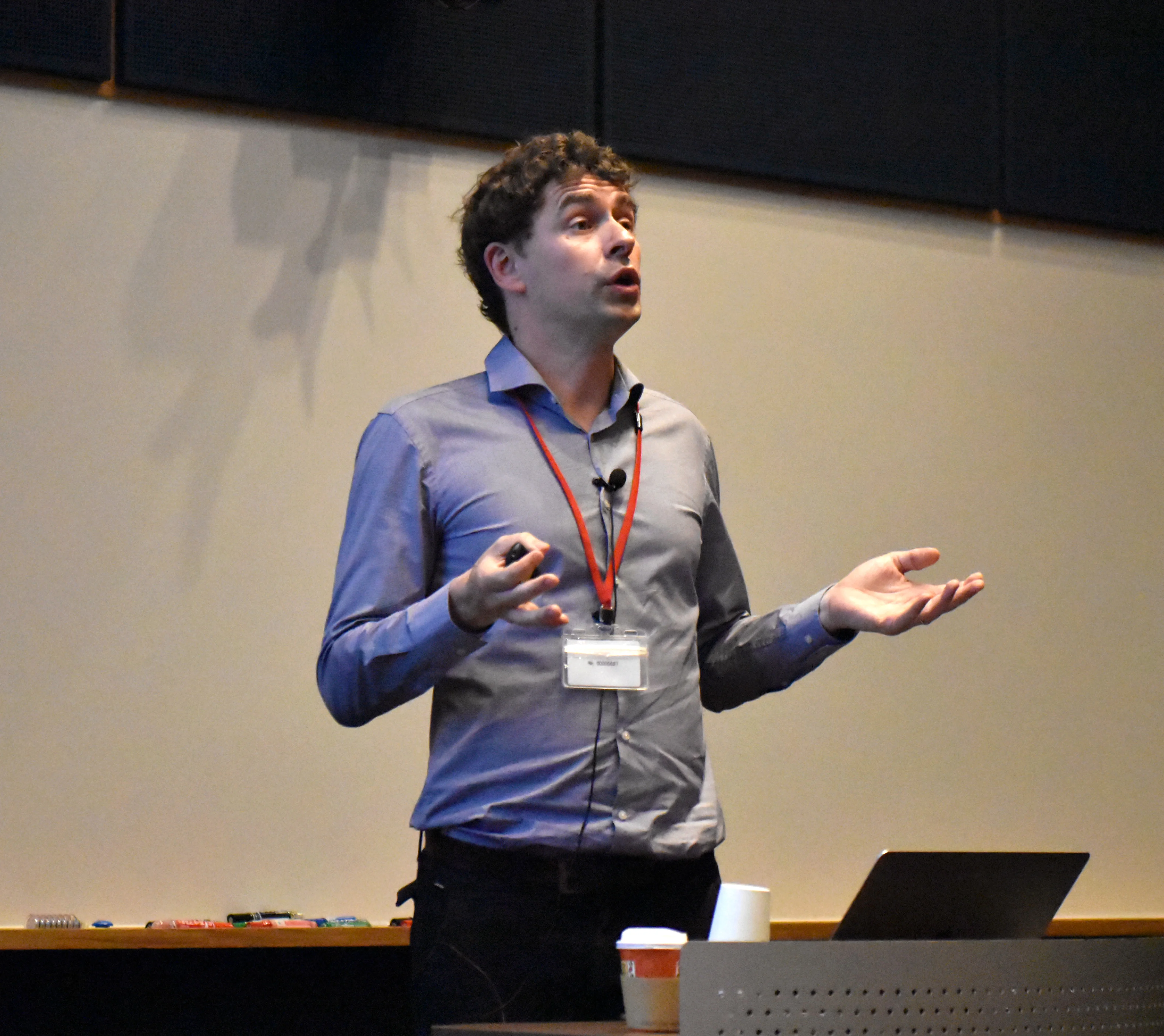
Image from Wikipedia
Image from Wikipedia
Johannes Krause: The Archaeogeneticist Who Retells Human History with Ancient DNA
A Researcher at the Intersection of the Past, Evolution, and Historical Infection Research
Johannes Krause is not a musician, but a German biochemist and archaeogeneticist whose work has shaped the study of human evolution and historical infectious diseases. Born on July 17, 1980, in Leinefelde, he is one of the key voices in a research field that reconstructs significant historical contexts from tiny traces of DNA. His career combines scientific precision with a narrative power that shapes a new understanding of the past from laboratory work, sample analysis, and interdisciplinary research. ([de.wikipedia.org](https://de.wikipedia.org/wiki/Johannes_Krause?utm_source=openai))
Biographical Roots and Scientific Rise
Krause grew up in East Germany and was born in Leinefelde in the then district of Worbis. After studying biochemistry at the University of Leipzig and at University College Cork in Ireland, he earned his doctorate in genetics in Leipzig and at the Max Planck Institute for Evolutionary Anthropology. The early stages of his career already point in a clear direction: a scientific path that combines biochemistry, genetics, and the major questions of human history. ([leopoldina.org](https://www.leopoldina.org/mitglieder/mitgliederverzeichnis/detail/johannes-krause?utm_source=openai))
His academic career developed in clear stages. After a postdoctoral period in Leipzig, he became a junior professor in Tübingen in 2010, later serving as a professor of archaeo- and paleogenetics and ultimately as director at the Max Planck Institute for Evolutionary Anthropology in Leipzig. In between, he also held the position of founding director of the Max Planck Institute for Human History in Jena, which he helped establish from 2014 alongside Russell Gray. This career showcases a researcher who not only produces results but also shapes institutions. ([leopoldina.org](https://www.leopoldina.org/mitglieder/mitgliederverzeichnis/detail/johannes-krause?utm_source=openai))
Archaeogenetics as a Scientific Signature
Johannes Krause is closely associated with the establishment of archaeogenetics, the discipline that deciphers ancient DNA from historical and prehistoric contexts. His research spans from prehistoric migration movements and the genetic history of humans to pathogens of historical epidemics. His work has been particularly visible through his collaboration with Svante Pääbo in decoding Neanderthal genetics and in studies that brought the Denisovans, as a distinct form of early humans, to public attention. ([leopoldina.org](https://www.leopoldina.org/mitglieder/mitgliederverzeichnis/detail/johannes-krause?utm_source=openai))
In the scientific community, Krause represents a method that not only interprets history but also provides molecular evidence. The work he and his team have advanced on ancient DNA has yielded new answers to questions regarding ancestry, migration, and adaptation. His research is considered pioneering within academic circles, as he is often described as a co-founder of an entire research field. ([leopoldina.org](https://www.leopoldina.org/mitglieder/mitgliederverzeichnis/detail/johannes-krause?utm_source=openai))
Key Research Topics and International Impact
A central theme in Krause's work is human evolution, particularly the history of early populations in Europe and Eurasia. He also investigates pathogens from historical epidemics and the role of environmental and migration processes in genomic history. His research has influenced the debate around Indo-European languages, as genetic findings combined with linguistic arguments support new hypotheses about prehistoric migratory movements. ([leopoldina.org](https://www.leopoldina.org/mitglieder/mitgliederverzeichnis/detail/johannes-krause?utm_source=openai))
The international reach of his work is reflected in academic roles and networks in Europe, the USA, and Asia. Krause has served as a visiting professor in Xi'an, held memberships on scientific advisory boards, and has been active in various research consortia. This role as an interface between laboratory, university, and global research collaboration establishes him as an authority far beyond the German scientific landscape. ([leopoldina.org](https://www.leopoldina.org/mitglieder/mitgliederverzeichnis/detail/johannes-krause?utm_source=openai))
Awards, Memberships, and Scientific Authority
Notable awards include the Newcomb Cleveland Prize from the AAAS for a Science article on the Neanderthal genome, the Thuringian Research Award, the Fabio Frassetto International Prize for Paleoanthropology, the Academy Award from the Berlin-Brandenburg Academy of Sciences, and the Leibniz Prize 2026. Furthermore, Krause has been a member of the Leopoldina since 2024 and a member of the Berlin-Brandenburg Academy of Sciences since 2026. These honors underscore his scientific authority and the ongoing relevance of his research. ([leopoldina.org](https://www.leopoldina.org/mitglieder/mitgliederverzeichnis/detail/johannes-krause?utm_source=openai))
His publications also contribute to his visibility. In addition to scientific articles, he co-authored the book Hybris: The Journey of Humanity Between Departure and Failure with Thomas Trappe, which presents his research in a broader, accessible format. The Max Planck Society emphasizes that Krause can explain complex connections in an understandable and engaging way, further contributing his scientific work to the public discourse. ([de.wikipedia.org](https://de.wikipedia.org/wiki/Johannes_Krause?utm_source=openai))
Musical Classification? Not Applicable – But a Distinct Profile
For a classic musician biography, Johannes Krause lacks all typical parameters such as album releases, singles, charts, tours, or a discography. No official social media channels as an artist profile could be verified in web research. Thus, any portrayal as a music actor or pop name would be inaccurate; his public significance clearly lies in science, not in the music industry. ([de.wikipedia.org](https://de.wikipedia.org/wiki/Johannes_Krause?utm_source=openai))
This is precisely why his profile is interesting: Krause represents a kind of intellectual stage presence that is based not on show but on knowledge. His work combines analytical depth with public comprehensibility and shows how strongly scientific research can impact culture. For readers interested in ancestry, genetics, and human history, Johannes Krause is one of the most exciting German research personalities of our time. ([leopoldina.org](https://www.leopoldina.org/mitglieder/mitgliederverzeichnis/detail/johannes-krause?utm_source=openai))
Conclusion: Why Johannes Krause Remains Relevant
Johannes Krause captivates because he has developed a new narrative of humanity from ancient DNA. His career exemplifies scientific excellence, international recognition, and the courage to translate complex findings into socially relevant stories. Those interested in archaeogenetics, evolution, and the overarching themes of human history will find a benchmark in his work. There is no live experience in the classical sense, but his lectures, books, and public appearances make the fascination of his research immediately tangible. ([leopoldina.org](https://www.leopoldina.org/mitglieder/mitgliederverzeichnis/detail/johannes-krause?utm_source=openai))
Official Channels of Johannes Krause:
- Instagram: no official profile found
- Facebook: no official profile found
- YouTube: no official profile found
- Spotify: no official profile found
- TikTok: no official profile found
Sources:
- Wikipedia – Johannes Krause
- Leopoldina – Prof. Dr. Johannes Krause
- Max Planck Institute for Evolutionary Anthropology – Johannes Krause
- Max Planck Society – Johannes Krause on Our Ancestors
- Max Planck Society – Book Review: The Journey of Our Genes
- Max Planck Institute for Evolutionary Anthropology – Curriculum Vitae Johannes Krause