
François Couperin
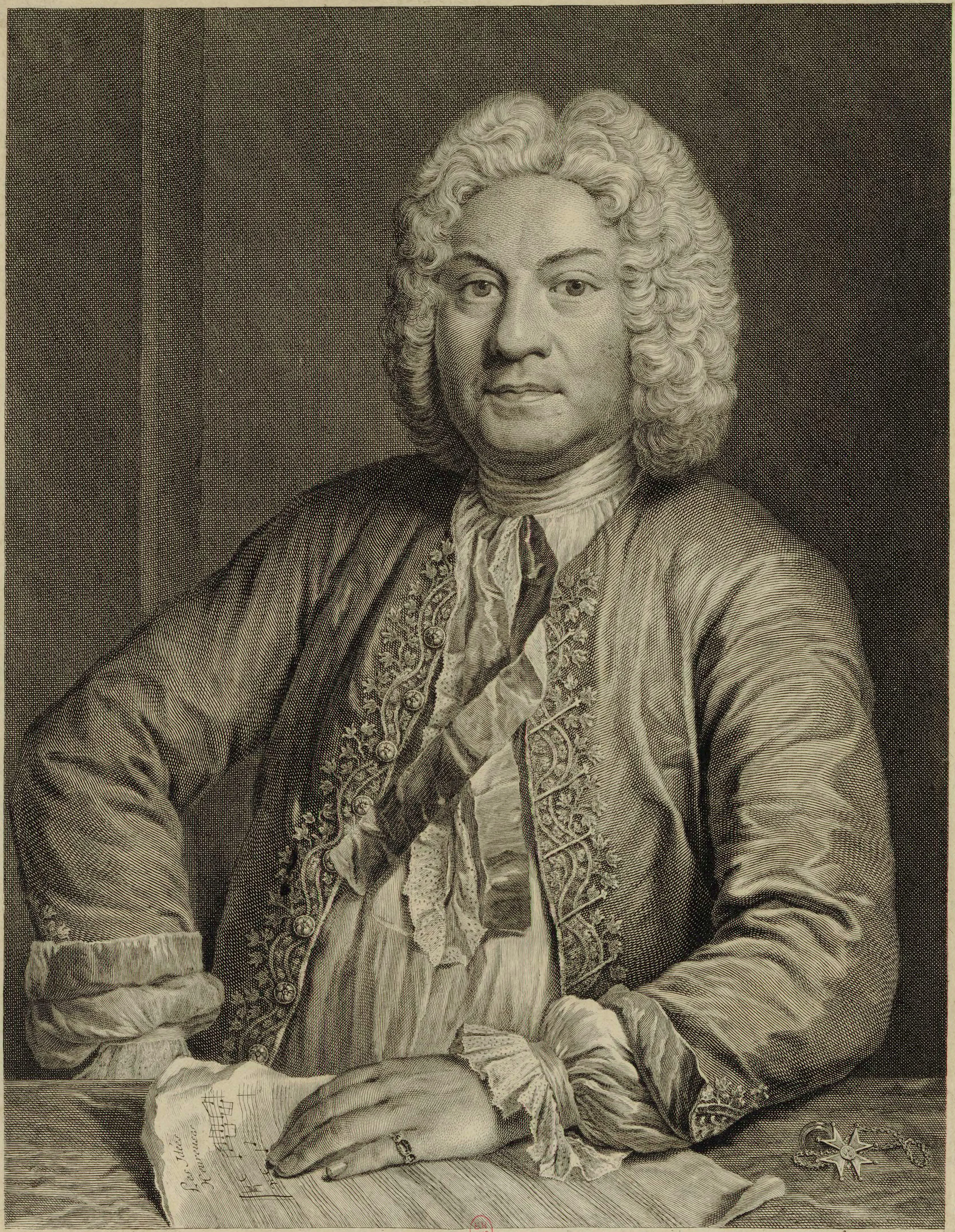
Image from Wikipedia
Image from Wikipedia
François Couperin – The Great Master of French Baroque Between Court, Church, and Harpsichord
Introduction: A name that shaped the music history of France
François Couperin, also known as François II Couperin, was one of the most influential French composers, organists, and harpsichordists of the Baroque era. Born on November 10, 1668, in Paris and passed away there on September 11, 1733, he exemplifies an art of measure, elegance, and the finest tonal nuance. Known as “Le Grand,” he holds a significant place in music history, positioned between Jean-Baptiste Lully and Jean-Philippe Rameau as a key figure of French music. ([fr.wikipedia.org](https://fr.wikipedia.org/wiki/Fran%C3%A7ois_Couperin?utm_source=openai))
Couperin came from a prominent family of musicians renowned for their ecclesiastical and instrumental traditions in France over generations. His work merges the discipline of church music with the poetic language of the harpsichord and the cultivated court music. This fusion of spiritual rigor and aristocratic refinement makes his artistic development fascinating even today. ([larousse.fr](https://www.larousse.fr/encyclopedie/groupe-personnage/Couperin/114915?utm_source=openai))
Biography: Rise in a musical dynasty
François Couperin's career began early in an environment saturated with music. He took on the position of organist at Saint-Gervais in 1685 and held it until 1723; later, he also worked at the Chapelle Royale and as a teacher for the royal family. His esteemed status among the musicians of his time is evident from the high positions he held at court and in the Parisian sacred music scene. ([larousse.fr](https://www.larousse.fr/encyclopedie/musdico/Fran%C3%A7ois_Couperin/167027?utm_source=openai))
His life remained closely tied to Paris. Couperin married Marie-Anne Ansault in 1689 and became the father of several children, including Marguerite-Antoinette Couperin, who herself became a notable harpsichordist and teacher at court. This continuation of his family underscores how his name is not only a symbol of individual mastery but also a whole school of French musical culture. ([larousse.fr](https://www.larousse.fr/encyclopedie/musdico/Fran%C3%A7ois_Couperin/167027?utm_source=openai))
The breakthrough as a stylistic harpsichordist
Couperin's true fame is primarily founded on his work for the harpsichord, published in four volumes between 1713 and 1730, comprising 27 “Ordres.” This collection is regarded as the most important French work for the instrument and establishes Couperin as one of the key shapers of the Baroque suite in France. With these pieces, he blurred the boundaries between dance movements, character pieces, and musical miniatures into a highly poetic art form. ([fr.wikipedia.org](https://fr.wikipedia.org/wiki/Fran%C3%A7ois_Couperin?utm_source=openai))
His theoretical and pedagogical thoughts were also particularly influential. With L’Art de toucher le clavecin, published in 1716, Couperin presented a treatise that systematically reflects on the playing technique, ornamentation, and articulation of the harpsichord. This work not only makes him a composer but also an author of a practice of playing that significantly shaped the French taste. ([larousse.fr](https://www.larousse.fr/dictionnaires/college/Couperin/9845?utm_source=openai))
Career at court and in the church: Between spirituality and representation
Couperin's musical career unfolded on two significant stages: the church and the royal court. As organist of Saint-Gervais and later as a musician of the Chapelle Royale, he was active in the most important musical institutions of his era. At the same time, he was sought after as a teacher of the key sound for the king's children, thereby achieving a status that combined artistic authority with social rank. ([larousse.fr](https://www.larousse.fr/encyclopedie/musdico/Fran%C3%A7ois_Couperin/167027?utm_source=openai))
The courtly environment also shaped his style. Couperin composed for the intellectually demanding, cultivated setting of Versailles, merging French elegance with Italian expressiveness. This dialogue of styles explains why his music is often seen as a bridge between national traditions. ([larousse.fr](https://www.larousse.fr/encyclopedie/groupe-personnage/Couperin/114915?utm_source=openai))
Musical development and compositional signature
Couperin's musical language is characterized by precise ornamentation, subtle rhythm, and a unique sensitivity to emotion. His Pièces de clavecin showcase a balance of formal clarity and poetic imagination that remains unique in French Baroque. Rather than merely reproducing dance forms, he transforms them into psychologically charged character portraits. ([larousse.fr](https://www.larousse.fr/encyclopedie/groupe-personnage/Couperin/114915?utm_source=openai))
In sacred music, Couperin also demonstrated great mastery. His motets, organ works, and Leçons de ténèbres exhibit a concentrated expressiveness that fills the sacred space not with pathos but with sonic dignity. His compositions combine liturgical function with musical sophistication, making his sacred output a lasting part of the Baroque repertoire to this day. ([larousse.fr](https://www.larousse.fr/dictionnaires/college/Couperin/9845?utm_source=openai))
Discography and legacy of work: The foundation of his posthumous fame
The discography surrounding François Couperin is rich with recordings of his harpsichord and chamber music, but his true historical legacy lies in the body of work itself. Among the most important cycles are the four books of Pièces de clavecin, the Concerts royaux, Les goûts-réunis, the trio sonatas, the organ masses, and his sacred pieces. These works form a body of work that is considered a reference in the music history of the Baroque. ([larousse.fr](https://www.larousse.fr/dictionnaires/college/Couperin/9845?utm_source=openai))
Particularly significant is that Couperin is regarded in musicological perception as the French master whose influence extended far beyond national borders. An earlier musicological classification describes him as the first great composer who wrote specifically and exclusively for the harpsichord; at the same time, his influence on younger contemporaries like Handel and Bach is highlighted. This perspective explains why Couperin is considered not only a French but also a European Baroque composer. ([s9.imslp.org](https://s9.imslp.org/files/imglnks/usimg/7/74/IMSLP05903-CuperinCompleteKyboardWorks1.pdf?utm_source=openai))
Critical reception and cultural influence
The music press and scholarly literature consistently emphasize the delicacy of Couperin's sound language. He is regarded as the master of that French aesthetic where discretion, refinement, and expressive precision form a unity. The fact that later generations continuously re-edited, performed, and commented on his works points to an extraordinary historical resonance. ([harmoniamundi.com](https://www.harmoniamundi.com/wp-content/uploads/2023/12/902725_booklet.pdf?utm_source=openai))
His cultural influence runs deep in the perception of French Baroque. Couperin is often described as a link between the solemn court music of the 17th century and a more sensitive, individualized sound language of the early 18th century. In this role, he remains one of the most shaping figures in European keyboard music. ([fr.wikipedia.org](https://fr.wikipedia.org/wiki/Fran%C3%A7ois_Couperin?utm_source=openai))
Current projects and releases: A composer who lives on today
Even though François Couperin himself does not have any current projects in the modern sense, his presence in today’s catalogs, labels, and programs illustrates how vibrant his work remains. Releases and recordings from 2024 and 2025 continue to place his music in new contexts, for instance, in productions by Apple Music, Warner Classics, and AllMusic. This evidence shows that Couperin plays a lasting role in contemporary repertoire. ([music.apple.com](https://music.apple.com/fr/artist/franc-ois-couperin/1698794926?utm_source=openai))
His name also appears consistently in current music releases and booklets, underscoring the ongoing relevance of his works in the realm of early music. Especially in the context of historically informed performance practice, Couperin remains a focal point for harpsichordists, organists, and ensembles that combine Baroque sound with stylistic accuracy. ([cdn.outhere-music.com](https://cdn.outhere-music.com/outhere.prod/public/imported/albums/couperin-concerts-royaux-an29993-20220627151531-booklet.pdf?utm_source=openai))
Conclusion: Why François Couperin continues to captivate
François Couperin fascinates because he brought French Baroque music to a peak of sophistication. His musical career unites courtly elegance, spiritual depth, and an exceptionally precise art of musical characterization. Those who listen to his works do not just experience historical music; they engage with a school of listening where every note carries meaning. ([larousse.fr](https://www.larousse.fr/dictionnaires/college/Couperin/9845?utm_source=openai))
Especially his harpsichord pieces and sacred works demonstrate how modern finely calibrated expressiveness can sound. Couperin remains compelling because his music, despite its age, possesses immediate presence and oscillates between intimacy and representation. A live experience with his works offers the ideal access to a composer whose sound world continues to radiate attraction, depth, and stylistic grandeur. ([fr.wikipedia.org](https://fr.wikipedia.org/wiki/Musique_de_clavecin?utm_source=openai))
Official channels of François Couperin:
- Instagram: no official profile found
- Facebook: no official profile found
- YouTube: no official profile found
- Spotify: no official profile found
- TikTok: no official profile found
Sources:
- Wikipedia – François Couperin
- BnF – Notice de personne “Couperin, François (1668-1733)”
- Larousse – François Couperin dit François II le Grand
- Larousse – Couperin
- IMSLP – Couperin, François: Works and collected works
- Apple Music Classical – François Couperin
- Warner Classics – François Couperin Releases
- AllMusic – François Couperin Biography, Discography, Albums & Expert Reviews
- Wikipedia – Image and text source