
Florentina Holzinger
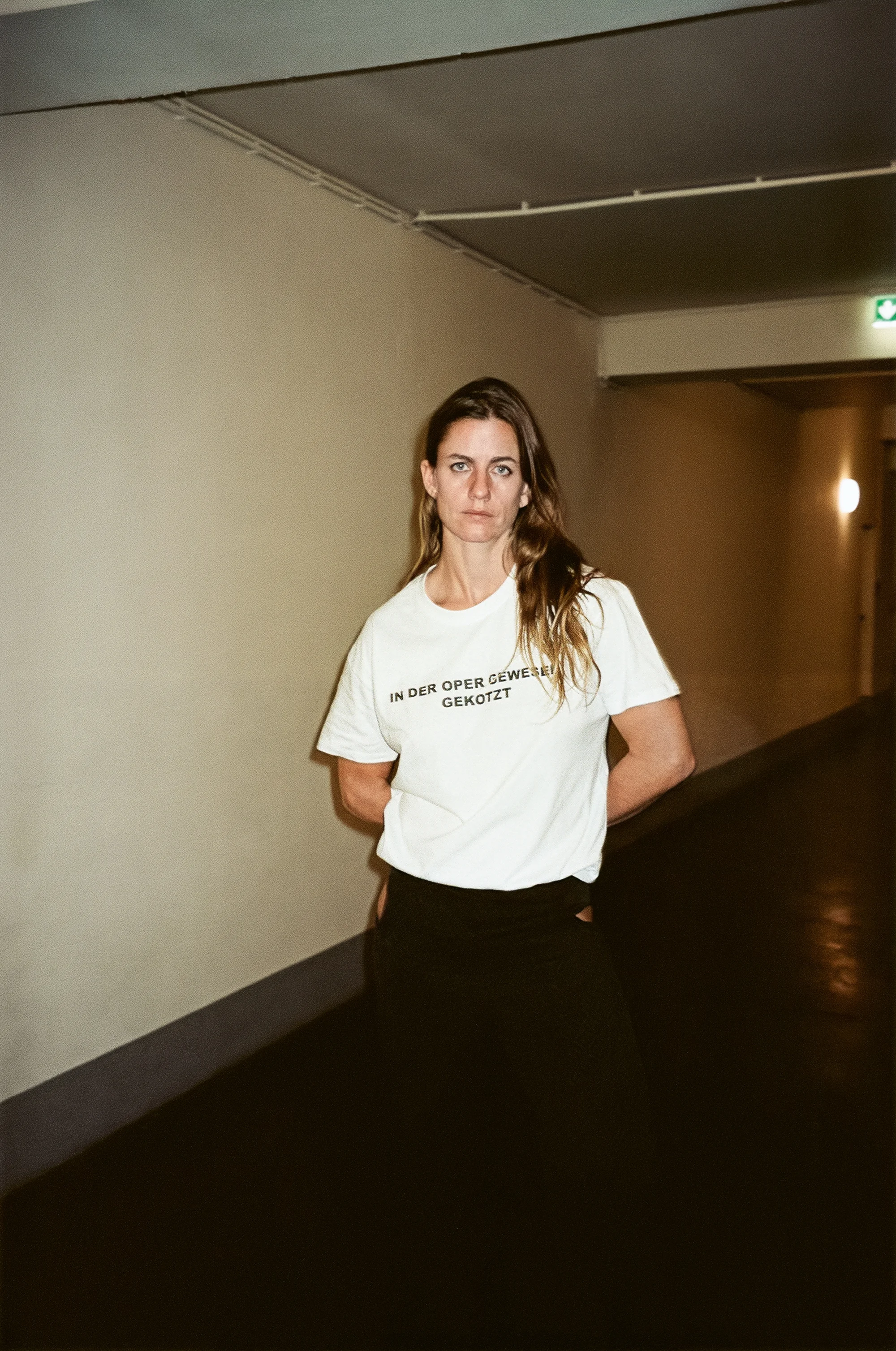
Image from Wikipedia
Image from Wikipedia
Florentina Holzinger – The Radical Architect of the Body between Dance, Theater, and Performance Art
An artist who makes the body a stage for freedom, risk, and reinvention
Florentina Holzinger, born in 1986 in Vienna, is one of the most prominent voices in European performance art. Her works combine contemporary dance, theater, opera, acrobatics, stunt work, and elements of entertainment culture into a distinctive theatrical language. Instead of providing linear narratives, she develops body-intensive imagery where nudity, depictions of violence, mythological motifs, and female self-empowerment collide. ([de.wikipedia.org](https://de.wikipedia.org/wiki/Florentina_Holzinger))
Holzinger has distinguished herself with an aesthetic practice that does not accept a separation between high culture and popular culture. Her works rely on physical presence, choreographic precision, and a visual language that fascinates and challenges the audience alike. This tension defines her status in today's musical theater and performance context: she perceives the stage not as an illustration but as a playground for bodies, power, and perception. ([de.wikipedia.org](https://de.wikipedia.org/wiki/Florentina_Holzinger))
Biographical Roots: Vienna, Education, and Early Artistic Radicality
Holzinger studied choreography at the School for New Dance Development in Amsterdam, where she quickly drew attention with radical forms of representation. Even during her university years, nude performances became a trademark that outlined her later artistic signature. This early commitment shapes her career in a broader sense: not as a classical trajectory in pop or rock, but as a performative development between dance, composition, sound, and musical theater. ([vogue.de](https://www.vogue.de/artikel/warum-florentina-holzinger-eine-der-herausragendsten-regisseurinnen-unserer-zeit-ist?utm_source=openai))
At the beginning of her career, she repeatedly collaborated with Vincent Riebeek. Together, they created works such as No Applause for Shit (2011), Spirit (2012), Wellness (2013), and Beauty Evening: Dances of Vice, Horror, and Ecstasy (2015). These early works granted her visibility in the European dance and performance scene and established her as an artist who not only tests boundaries but systematically shifts them. ([de.wikipedia.org](https://de.wikipedia.org/wiki/Florentina_Holzinger))
The Breakthrough: From Local Scene Figure to International Authority
The major breakthrough came with works that intertwined canonical dance history, stunt aesthetics, and feminist reinterpretation. Apollon (2017) referenced Stravinsky and Balanchine while juxtaposing the classical ballet body with an ensemble of acrobatic, stunt, and freakshow elements. In the realm of performance, Holzinger became an artist who does not musealize historical forms but transforms them into explosive present-day experiences. ([de.wikipedia.org](https://de.wikipedia.org/wiki/Florentina_Holzinger))
This development became particularly evident with Dance: A Sylph-like Dream in Stunts (2019). The production drew on motifs from romantic ballet, intertwined them with stunt work, body theater, and feminist reinterpretation, and was invited to the Berliner Theatertreffen in 2020. Critics described the work as extraordinarily uncompromising; at the same time, it marked Holzinger's transition from an insider tip artist to an internationally discussed author of body images. ([de.wikipedia.org](https://de.wikipedia.org/wiki/Florentina_Holzinger))
Musical Theater, Opera, and the Expansion of the Format
With SANCTA, Holzinger officially entered the field of musical theater in 2024. Her first opera production, after Paul Hindemith's Sancta Susanna, premiered at the Mecklenburg State Theater in Schwerin and was expanded into a full evening through sacred works and new compositions. The Berliner Festspiele described the production as an engagement with a holy mass, where performers explore the boundaries of physical expressions. ([de.wikipedia.org](https://de.wikipedia.org/wiki/Florentina_Holzinger))
The reception of SANCTA exemplified how strongly Holzinger's art provokes debates. The production was invited to several festivals and was selected for the Berliner Theatertreffen in 2025. In parallel, Deutschlandfunk reported on the hostility and hatred Holzinger received following headlines about naked nuns and real blood in her performance. This mix of public controversy, aesthetic radicality, and institutional recognition defines her status as an author of contemporary theater. ([de.wikipedia.org](https://de.wikipedia.org/wiki/Florentina_Holzinger))
Works and Artistic Development: A Performative Chronicle
The sequence of works from Silk (2011) to Seaworld Venice (2026) shows a remarkable consistency. Holzinger progressed from early collaborative formats to large-scale stage works and site-specific projects that intertwine technical apparatus, music, ritual, and body drama. In this chronology, clear lines can be observed: a focus on physical extremity, a joy in the choreography of risk, and a continuous expansion of the format toward musical theater, installation, and large-scale performance. ([de.wikipedia.org](https://de.wikipedia.org/wiki/Florentina_Holzinger))
In 2021, she followed with A Divine Comedy, in 2022 Ophelia's Got Talent, in 2023 Kranetude and Scrap Etude, in 2025 A Year Without Summer, and in 2026 Crash Pipe and Seaworld Venice. This sequence showcases an artist whose work continues to evolve in ever-new constellations of body, myth, technology, and sound. The titles themselves reveal much about her dramaturgy: she conceptualizes pieces as states, as experimental arrangements, and as aesthetic promises. ([de.wikipedia.org](https://de.wikipedia.org/wiki/Florentina_Holzinger))
Style, Signature, and Cultural Relevance
Holzinger's style merges contemporary dance with performance art, acrobatics, martial arts, stunts, sideshow elements, and references to pop and high culture. Recurring motifs include nudity, physical boundary experiences, female self-empowerment, violence, pain, as well as religious and mythological symbolism. This blend makes her stage presence unmistakable: she creates a theater of extremes that never merely provokes but reconsiders the body as a political and poetic medium. ([de.wikipedia.org](https://de.wikipedia.org/wiki/Florentina_Holzinger))
Critics often describe Holzinger's works as an expansion of the concepts of dance and theater. Some voices appreciate her productions as emancipatory and formally bold, while others respond to the explicit imagery with irritation or rejection. Egbert Tholl highlighted the "comprehensive emancipation of the female body as a means of expression," while Jan-Heiner Tück sharply criticized SANCTA; these very contrasts underscore the cultural impact of her art. ([de.wikipedia.org](https://de.wikipedia.org/wiki/Florentina_Holzinger))
Current Projects: Venice, Bregenz, and the Next Expansion of the Stage
In 2026, Holzinger, together with curator Nora-Swantje Almes, will design the Austrian Pavilion at the 61st Biennale di Venezia. Under the title SEAWORLD VENICE, she is developing a work that uses water as a motif, material, and symbol, connecting dance, theater, performance, and installation. The official Biennale communication situates the project in an exploration of the human body in a radically changing landscape where nature and technology converge. ([de.wikipedia.org](https://de.wikipedia.org/wiki/Florentina_Holzinger))
Beyond Venice, Holzinger remains present. The Kunsthaus Bregenz announced for July 11, 2026, a site-specific Étude for Bregenz, intended as a satellite program to SEAWORLD VENICE. Four drummers, ten performers, a crane, and a bell are to create new myths from the silence of the water. This illustrates how closely Holzinger connects her work with large-format, precisely curated art venues. ([kunsthaus-bregenz.at](https://www.kunsthaus-bregenz.at/fileadmin/user_upload/KUB/KUB_Projekte/Florentina_Holzinger/PR_Invitation_PC_Florentina_Holzinger_Bodensee_Etude_EN.pdf))
Awards, Recognition, and Institutional Embeddedness
Holzinger has received multiple awards for her work. The most notable honors include the Prix Jardin d'Europe 2012 for Silk, the award for Production of the Year in the critics' poll of Theater heute for Dance, the Outstanding Artist Award for Performance, the Nestroy Award for Best Direction, and the German Theater Prize Der Faust for Ophelia’s Got Talent. This list makes it clear: her art is not only discursively powerful but also highly recognized institutionally. ([de.wikipedia.org](https://de.wikipedia.org/wiki/Florentina_Holzinger))
In addition, she has a prominent presence in theaters and festivals such as the Berliner Festspiele, Volksbühne Berlin, Sophiensaele, Mecklenburg State Theater, Kunsthaus Bregenz, and the Biennale in Venice. Such venues underscore her authority in the international contemporary art scene and demonstrate that Holzinger is no longer merely read as a provocateur. She is a defining shaper of what performance, musical theater, and choreographic thinking can achieve today. ([de.wikipedia.org](https://de.wikipedia.org/wiki/Florentina_Holzinger))
Conclusion: Why Florentina Holzinger Remains Exciting
Florentina Holzinger is fascinating because she perceives the body as a stage, argument, and material simultaneously. Her career in the broader sense is a career of expanding forms: from early collaborative projects through radical dance theater to grand operatic forms and international biennale presence. Those who experience her works witness not only performance art but a relentless examination of power, lust, myth, technology, and emancipation. ([de.wikipedia.org](https://de.wikipedia.org/wiki/Florentina_Holzinger))
Especially live, this art unfolds its greatest impact. Holzinger's pieces thrive on physical immediacy, on risk, breath, sound, and the intense relationship between ensemble and audience. Those seeking contemporary art that challenges both mind and body should not miss experiencing Florentina Holzinger on stage. ([impulstanz.com](https://www.impulstanz.com/videos/aid1058/))
Official Channels of Florentina Holzinger:
- Instagram: No official profile found
- Facebook: No official profile found
- YouTube: No official profile found
- Spotify: No official profile found
- TikTok: No official profile found
Sources:
- Wikipedia – Florentina Holzinger
- ImPulsTanz – Apollon Trailer / Florentina Holzinger
- Kunsthaus Bregenz – Press Release "Florentina Holzinger: Étude"
- Kunsthaus Bregenz – Lake Constance Étude / Press Invitation
- Opera Ballet Vlaanderen – Discussion on SANCTA
- Deutschlandfunk – Report on SANCTA and the Hostility
- Munzinger – Florentina Holzinger
- La Biennale di Venezia – Biennale Arte 2026 / Austria
- Florentina Holzinger – Homepage
Upcoming Events
asphalt Festival 2026: Florentina Holzinger - A Year without Summer