
Elisabeth Scholl
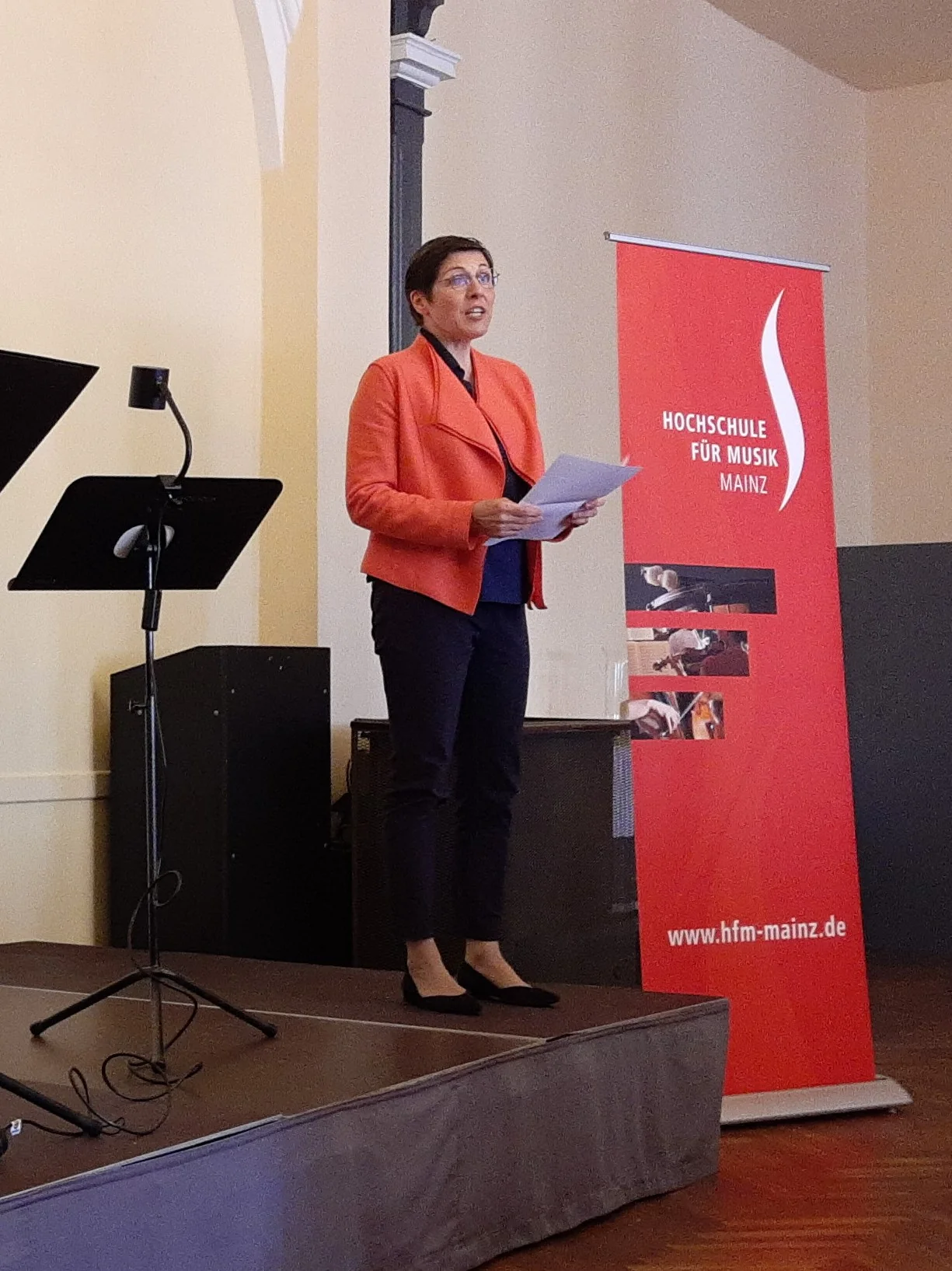
Image from Wikipedia
Image from Wikipedia
Elisabeth Scholl: A Soprano Between Baroque, Research, and Historical Performance Practice
A Voice That Brings Early Music to Life
Elisabeth Scholl is one of the prominent German sopranos in the field of Baroque and Early Music. Born in 1966 in Kiedrich in the Rheingau region, she grew up in a musical environment that shaped her artistic development early on. Her career combines singing, musicological curiosity, and historically informed interpretation into a distinctly clear profile. ([de.wikipedia.org](https://de.wikipedia.org/wiki/Elisabeth_Scholl))
Those who examine her music career quickly recognize an artistic concept with substance: not merely vocal brilliance, but stylistic precision, source-based work, and a deep connection to the repertoire of the 17th and 18th centuries. Elisabeth Scholl represents a soprano artistry that transforms ornamentation, affective expression, and text interpretation into a cohesive musical thought. This is precisely where her particular authority lies within the Baroque scene. ([de.wikipedia.org](https://de.wikipedia.org/wiki/Elisabeth_Scholl))
Early Influences in the Rheingau and First Steps on Stage
As a child, Elisabeth Scholl began her vocal training as the first girl in the choir of the Kiedrich choir boys. There, she already took on smaller solos, including in Vivaldi's Gloria and Bach's Christmas Oratorio. This early practice in the choral culture of the Rheingau not only shaped her voice but also her musical thinking in the interplay of ensemble sound, articulation, and spiritual expressiveness. ([elisabethscholl.com](https://elisabethscholl.com/wp-content/uploads/2021/03/ES-Vita-2021-2.pdf))
A pivotal moment in her youth was her performance as the First Boy in Mozart's Die Zauberflöte at the Hessian State Theatre in Wiesbaden at the age of 16. Here, the desire to become a singer crystallized in a real stage encounter with music theatre. This early stage experience explains why Scholl later acted with natural sovereignty in both concert settings and on the opera stage. ([elisabethscholl.com](https://elisabethscholl.com/wp-content/uploads/2021/03/ES-Vita-2021-2.pdf))
From Studies to Specialization in Early Music
After graduating from high school, Elisabeth Scholl initially pursued an academic path, studying musicology, English studies, and art history at the Johannes Gutenberg University Mainz. At the same time, she received private singing lessons from Eduard Wollitz. This dual path of academia and singing proved crucial for her later artistic identity, as she understands interpretation not merely as execution but as reflected reconstruction. ([de.wikipedia.org](https://de.wikipedia.org/wiki/Elisabeth_Scholl))
She deepened her specialization at the Schola Cantorum Basiliensis, one of the most important centers for historical performance practice. There, she studied Early Music with René Jacobs and Richard Levitt and additionally completed the opera studio at the Basel Music Academy. During this phase, technique, source work, and stylistic discipline merged into the artistic toolbox that would shape her later career in Baroque music. ([de.wikipedia.org](https://de.wikipedia.org/wiki/Elisabeth_Scholl))
International Career in Concert Halls and European Festivals
Since then, Elisabeth Scholl has performed internationally as a freelance singer and collaborated with a number of significant ensembles in Early Music, including the Freiburg Baroque Orchestra, the Akademie für Alte Musik Berlin, Concerto Köln, Anima Eterna, and Cantus Cölln. Her presence on these stages demonstrates her grounding in the top tier of historically informed performance practice. At the same time, it points to a career that does not hinge on an opera house but is built on flexibility, stylistic precision, and repertoire competence. ([de.wikipedia.org](https://de.wikipedia.org/wiki/Elisabeth_Scholl))
Her name is also firmly established on festival stages. She has performed as a soloist at the Schleswig-Holstein Music Festival, the Rheingau Music Festival, the Lucerne Festival, the Festival van Vlaanderen, the Handel Festivals in Halle, Göttingen, and Karlsruhe, as well as at the BBC Proms. Such invitations do not arise by chance: they attest that Scholl is perceived as a reliable interpreter with a clear profile in an international context. ([de.wikipedia.org](https://de.wikipedia.org/wiki/Elisabeth_Scholl))
Repertoire Ranging from Handel, Vivaldi, Mozart, and Further Baroque
Elisabeth Scholl's repertoire spans from Alessandro Grandi to Alessandro Scarlatti and Reinhard Keiser, through to Handel, Vivaldi, Haydn, and Mozart. This breadth is particularly meaningful for a Baroque soprano, as it incorporates diverse vocal demands: rhetorical precision, agility, breath economy, and a keen sense for affect and text. Her discography shows that she not only meets these demands but also interprets them expressively. ([de.wikipedia.org](https://de.wikipedia.org/wiki/Elisabeth_Scholl))
Her opera and stage performances include roles in works by Vivaldi, Mozart, and Haydn. Notably, these include the Countess in Figaro, Caio in Vivaldi’s Ottone in villa, Clarice in Haydn’s Il mondo della luna, and Donna Elvira in Mozart’s Don Giovanni. These roles mark a type of soprano who is not reduced to virtuosity but rather combines psychological nuances, stylistic elegance, and textual clarity. ([elisabethscholl.com](https://elisabethscholl.com/wp-content/uploads/2021/03/ES-Vita-2021-2.pdf))
Discography: Between Rediscovery and Stylistic Refinement
The selection of her recordings reveals a clear focus on rediscoveries and musicologically relevant repertoires. These include Opera Arias and Instrumental Works by Reinhard Keiser, Inferno – Cantate drammatiche by Alessandro Scarlatti, Cantate per Passione by Giovanni Battista Ferrandini, as well as Inspired by Goethe featuring songs by composers of the 18th and 19th centuries. Additionally, Johann Christian Bach's Magnificat and Handel's Athalia are part of her repertoire. ([de.wikipedia.org](https://de.wikipedia.org/wiki/Elisabeth_Scholl))
Particularly revealing is her work on rarely performed pieces, such as with the ensemble Modo Antiquo under Federico Maria Sardelli. The recording of Scarlatti's Inferno exemplifies her interest in music manuscripts, editorial research, and artistic first encounters. Elisabeth Scholl connects scholarly diligence and musical practice in a way that holds significant documentary and interpretative value in the Baroque field. ([elisabethscholl.com](https://elisabethscholl.com/wp-content/uploads/2021/03/ES-Vita-2021-2.pdf))
Style, Sound Ideal, and Artistic Signature
Elisabeth Scholl's artistic development is closely linked to historical performance practice. Her approach to music is based on a precise reading of sources, clear diction, and an aesthetic restraint that perceives expression not as overwhelming but as controlled intensity. Particularly in Baroque music, where ornamentation, recitative art, and affect architecture are central, this style unfolds its special effect. ([en.elisabethscholl.com](https://en.elisabethscholl.com/about))
Her work as a singer, musicologist, and researcher reinforces this impression. She describes engaging with unpublished music manuscripts, tracking them down in libraries, transcribing, and performing them. This creates a profile that goes far beyond the customary understanding of a concert soloist: Scholl is an interpreter, a repertoire discoverer, and a mediator of a musical past that becomes present in her voice. ([elisabethscholl.com](https://elisabethscholl.com/wp-content/uploads/2021/03/ES-Vita-2021-2.pdf))
Teaching, Research, and Influence on the Next Generation
Since 2009, Elisabeth Scholl has been teaching as a professor, first at the University of Music in Nuremberg and later at the University of Music in Mainz. There, she teaches her own singing class and took over the artistic direction of the Baroque Vocal Academy in 2021. This expands her stage presence into a pedagogical and institutional dimension that is crucial for the sustainable development of the field. ([en.elisabethscholl.com](https://en.elisabethscholl.com/about))
Her teaching activities are not a side note but part of her artistic identity. Anyone who wants to convey Early Music seriously needs stylistic knowledge, experience in ensemble singing, and historical awareness. This combination is precisely what Scholl brings, which is why her influence is evident not only in recordings and concerts but also in the training of young singers. ([en.elisabethscholl.com](https://en.elisabethscholl.com/about))
Current Projects and Recent Activities
On the current pages of her official website, concerts, academic projects, and work related to the Baroque Vocal Academy have been particularly visible in recent years. Notable events include the concert format Happy Birthday, Mr. Bach!, the opening concert of the Baroque Vocal Academy, and a benefit concert for the Mainz Palliative Foundation featuring works from the Early Baroque. These indicators clearly show that Scholl's work continues to thrive on the dialogue between concert practice, nurturing talent, and repertoire maintenance. ([en.elisabethscholl.com](https://en.elisabethscholl.com/agenda))
No new albums or major releases were found in the verified web results for 2024 and 2025. Instead, the focus of her public presence lies on teaching, artistic leadership, and the cultivation of the Baroque repertoire. This aligns with an artist profile that emphasizes continuity over fleeting marketing. ([en.elisabethscholl.com](https://en.elisabethscholl.com/agenda))
Cultural Influence and Significance in the Baroque Field
Elisabeth Scholl represents a generation of singers who view Early Music not as a museum-like field, but as a vibrant, research-oriented, and performatively precise art form. Her international concert activity, her closeness to leading specialist ensembles, and her teaching practice at renowned universities make her an authority in the German-speaking and European Baroque scene. ([de.wikipedia.org](https://de.wikipedia.org/wiki/Elisabeth_Scholl))
Her dual role as an artist and scholar is particularly powerful. In a musical world that often separates interpretational brilliance from academic depth, Scholl convincingly unites both. This endows her career with cultural weight and explains why she repeatedly appears in reviews, programs, and professional contexts as a specialist of enduring relevance. ([forum-alte-musik-koeln.de](https://forum-alte-musik-koeln.de/data/scholl_elisabeth.html))
Conclusion: A Voice with Style Consciousness and Substance
Elisabeth Scholl fascinates through her rare combination of vocal discipline, scholarly precision, and artistic passion. Her music career demonstrates how rich Baroque music can sound when historical knowledge, technical security, and interpretative intelligence come together. Those who listen to her recordings or experience her live encounter a singer who does not merely embellish Early Music but reveals its inner tension. ([de.wikipedia.org](https://de.wikipedia.org/wiki/Elisabeth_Scholl))
This is precisely where her special appeal lies: Elisabeth Scholl transforms repertoire research into expression and expression into a credible artistic experience. An evening with her promises not only vocal quality but also an encounter with Baroque music at the highest level. For lovers of historically informed performance practice, she remains a worthwhile discovery and a reliable presence. ([en.elisabethscholl.com](https://en.elisabethscholl.com/about))
Official Channels of Elisabeth Scholl:
- Instagram: No official profile found
- Facebook: No official profile found
- YouTube: No official profile found
- Spotify: No official profile found
- TikTok: No official profile found