
Anton Pawlowitsch Tschechow
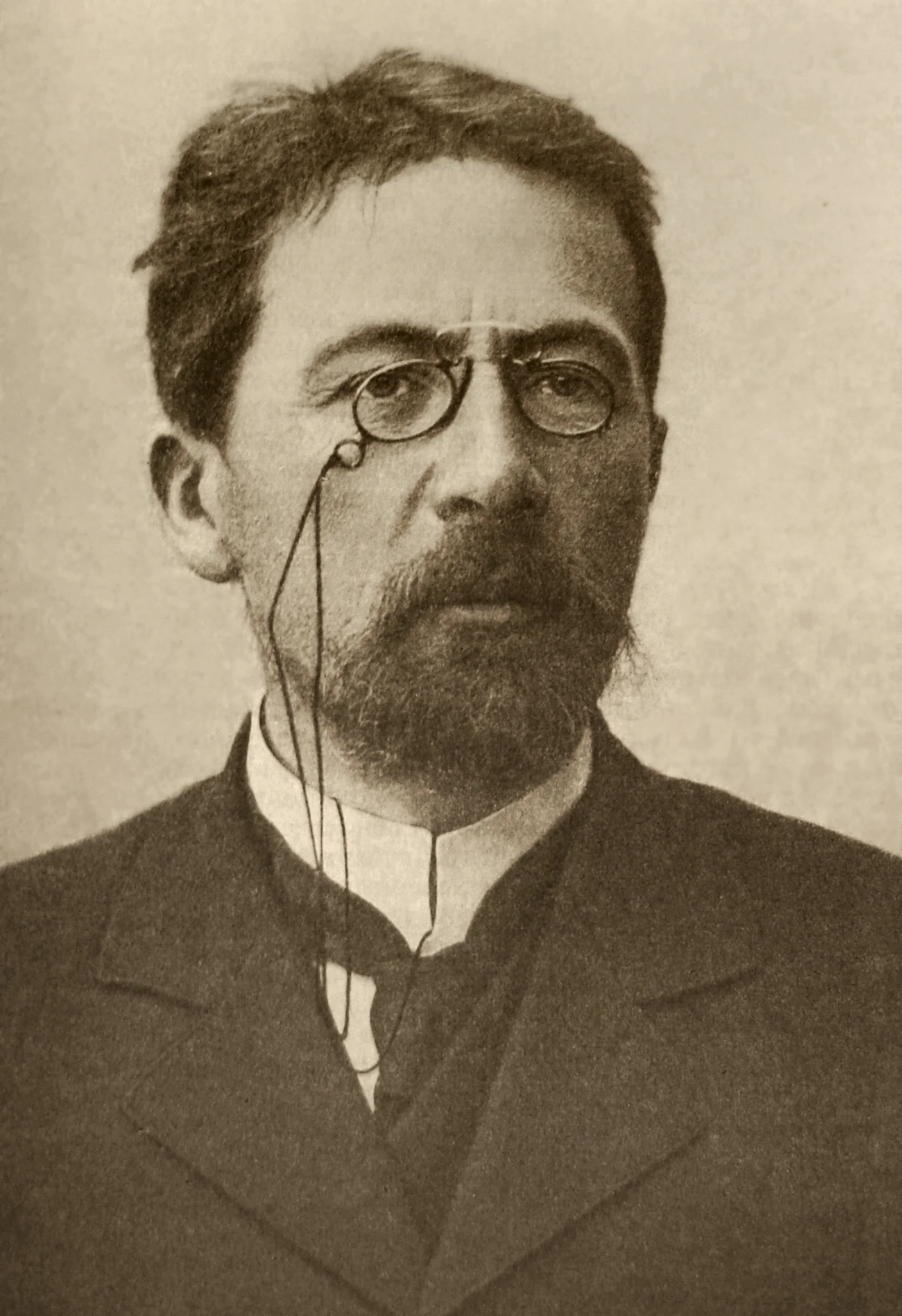
Image from Wikipedia
Image from Wikipedia
Anton Pavlovich Chekhov – The Master of Silent Intensity
An author who redefined world literature with quiet precision
Anton Pavlovich Chekhov is one of the great figures of Russian literature, having shaped modern storytelling and drama like few others. Born on January 29, 1860, in Taganrog and died on July 15, 1904, in Badenweiler, he combined literary productivity with a medical career, producing over 600 works between 1880 and 1903. His stories and plays merge keen observation, psychological depth, and a sober, often restrained language that remains a hallmark of the "Chekhovian" tone to this day. (de.wikipedia.org)
Biography: Background, education, and early influence
Chekhov came from a lower middle-class family in southern Russia's Taganrog. His childhood was marked by social pressure, hard work, and the family's economic crises, which prompted their move to Moscow in 1876, while he initially stayed in Taganrog to complete his schooling. These early experiences of confinement, dependency, and social hierarchy are reflected in his characters, who rarely appear heroic but reveal themselves through everyday conflicts. (encyclopedia.com)
In 1880, Chekhov moved to Moscow, studied medicine, and graduated as a doctor in 1884. Simultaneously, he began writing humorous sketches and short pieces for magazines, initially out of financial necessity. Literature was never a side project; it quickly grew into his life's work, even though he continued to take his medical career seriously, later practicing medicine primarily as a volunteer. (encyclopedia.com)
Career: From humorist to literary master
His early publications appeared under various pseudonyms and showcased Chekhov as a nimble observer of everyday life, mastering pointed scenes, humorous ideas, and social vignettes. These early texts developed into an art form where economy, suggestion, and precise dialogue became increasingly important. This phase is retrospectively regarded as the foundation of his later style, expanding from satirical brevity to psychological depth. (encyclopedia.com)
From the late 1880s onwards, Chekhov gained recognition as a significant author. Works like "The Steppe," "The Lady with the Dog," and "The Story of My Life" demonstrated his ability to capture social environments, inner movements, and silent crises with confidence. The critical reception and literary impact were grounded in his ability to intertwine tragedy and comedy without pathos, rendering human situations visible rather than explained. (encyclopedia.com)
The breakthrough in drama: The stage as a place of the unspeakable
Chekhov became internationally renowned primarily as a playwright. His major works – "The Seagull," "Uncle Vanya," "Three Sisters," and "The Cherry Orchard" – mark a turning point in theatrical history by focusing not on spectacular action but on tension arising from stillness, subtext, and thwarted longing. The premiere of "The Seagull" in 1896 initially failed, but a later production at the Moscow Art Theatre in 1898 brought recognition and established Chekhov as a defining author of modern drama. (encyclopedia.com)
This dramaturgical signature still feels modern today: characters speak past each other, hopes remain unfulfilled, and the essential often lies between the lines. Through this, Chekhov created a theatrical aesthetic that emphasizes the absent more than the spoken. Numerous later authors and directorial traditions in Europe and beyond embraced this form of quiet emphasis. (encyclopedia.com)
Discography? No – a literary oeuvre of rare density
While Chekhov certainly left no discography in the musical sense, his work has the coherence and relevance of a significant canon. Among his most important prose texts are early collections like "Tales of Melpomene" and "In the Twilight," alongside numerous short stories and late masterpieces of the short form. Overall, his oeuvre comprises several hundred short texts and dramas, ranking among the most significant in European modernism in terms of scope and impact. (encyclopedia.com)
His literary catalog showcases an enormous stylistic range: humorous vignettes, psychologically dense narratives, provincial stories, children’s tales, and dramatic works with lasting theatrical impact. This diversity explains why Chekhov cannot be confined to a single genre. He mastered the short form as confidently as the grand societal drama and shaped an unmistakable literary signature from both. (de.wikipedia.org)
Style and signature: Precision, silence, and psychological truthfulness
Chekhov's style thrives on reduction. He avoids theatrical exaggeration and often leaves his characters with their incompleteness, contradictions, and speechlessness. This creates a unique tension: it is not the loud event, but the suppressed feeling, the lost opportunity, or the unspoken truth that drives his texts. (encyclopedia.com)
This restraint makes his work perpetually readable. In the stories, life in the Russian provinces appears not as a backdrop but as a social and spiritual fabric where hope, exhaustion, longing, and self-deception intersect. Chekhov is therefore repeatedly described as an author of fine observation, melancholic accuracy, and open endings. (de.wikipedia.org)
Critical reception and cultural influence
The impact of Chekhov extends far beyond Russia. His plays and stories are considered foundational to modern literature and theater forms because they established a new balance between realism, subtext, and poetic density. Critics regularly describe him as an author who inseparably intertwines comedy and tragedy, thus elevating psychological storytelling to a new level. (encyclopedia.com)
Theatrical practice has also benefited sustainably from his work. The Moscow Art Theatre and its productions made Chekhov's dramas models for direction, acting, and stage aesthetics in the 20th century. His plays remain part of the international standard repertoire today, impressively confirming his cultural authority. (encyclopedia.com)
Later years, illness, and death in Badenweiler
After years of writing, traveling, and working, Chekhov's health increasingly declined. Tuberculosis accompanied him for a long time and shaped his life path as well as his writing, which became more concentrated, concise, and existentially open in his later works. He died on July 15, 1904, in Badenweiler, Germany, far from his Russian homeland, but already recognized as a European classic. (encyclopedia.com)
His death did not mark the end of his influence, but rather the beginning of an even broader reception. The ongoing presence of his plays on international stages and the continuous publication of his stories show that Chekhov was not only an author of his time but a lasting point of reference for modern literature, theater, and critical thought. (encyclopedia.com)
Conclusion: Why Chekhov fascinates to this day
Anton Pavlovich Chekhov fascinates because he rendered human existence visible without false drama but with the deepest emotion. His art lies in the quiet intensification, in the awareness of the unspoken, and in the ability to shape great literature from everyday situations. Those who read Chekhov or experience him on stage encounter an author who has shaped modern consciousness and whose works derive their power precisely from their restraint. (encyclopedia.com)
Official channels of Anton Pavlovich Chekhov:
- Instagram: No official profile found
- Facebook: No official profile found
- YouTube: No official profile found
- Spotify: No official profile found
- TikTok: No official profile found