
Alban Gerhardt
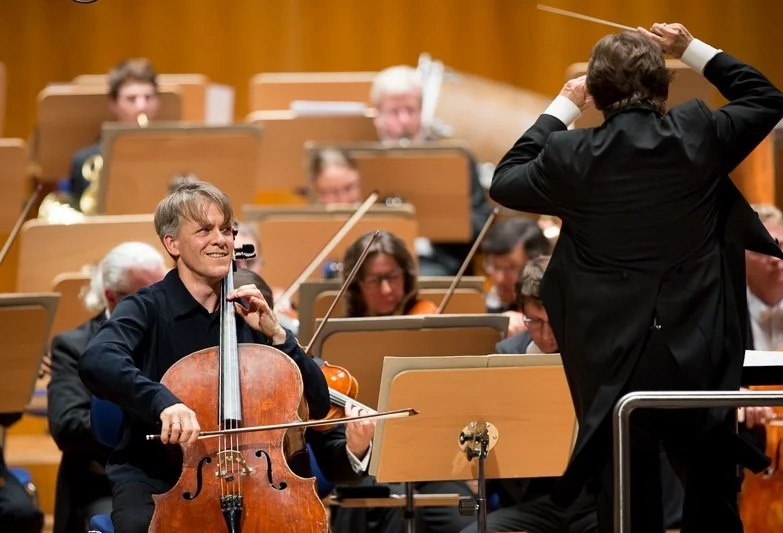
Image from Wikipedia
Image from Wikipedia
Alban Gerhardt – The German Cellist Between Classical Mastery, Curiosity, and the Present
A Cellist of International Standing with a Distinct Artistic Signature
Alban Gerhardt, born in Berlin in 1969, is among the defining cellists of his generation. Since his breakthrough on major international stages, he has established himself as a soloist with exceptional technique, a wide range of tonal color, and an artistic approach that goes far beyond mere virtuosity. His repertoire combines core cello literature with contemporary works, world premieres, and rarely performed concert pieces. ([en.wikipedia.org](https://en.wikipedia.org/wiki/Alban_Gerhardt?utm_source=openai))
Gerhardt comes from a musically rich family: his mother was a singer, and his father, Axel Gerhardt, was a member of the Berlin Philharmonic for many decades. This environment shaped his musical ear early on and his conception of interpretation as a storytelling art. Today, he is not only present as a soloist on significant stages but also as a musician who productively intertwines tradition and the present in the concert hall. ([albangerhardt.com](https://www.albangerhardt.com/personal-bio?utm_source=openai))
Biography: Early Influences, Education, and Initial Concert Successes
Alban Gerhardt's musical socialization began long before his first big applause. He grew up in a household where rehearsals, operas, and orchestra work were everyday occurrences; initially, he learned piano before his mother introduced him to the cello. Later, he studied with Marion Vetter, Götz Teutsch, Markus Nyikos, Boris Pergamenschikow, and Frans Helmerson, among others. ([albangerhardt.com](https://www.albangerhardt.com/personal-bio?utm_source=openai))
He made his public debut in 1987 with Haydn's Cello Concerto No. 2 at the Berlin Philharmonic. In the following years, he gained international attention through competition successes, including the German Music Competition in Bonn, the ARD International Music Competition in Munich, the International Leonard Rose Cello Competition, and the Young Concert Artists Audition in New York. These early accolades laid the foundation for a music career that quickly transcended national borders. ([en.wikipedia.org](https://en.wikipedia.org/wiki/Alban_Gerhardt?utm_source=openai))
The International Breakthrough
The real international breakthrough came in 1991 with his debut at the Berlin Philharmonic under Semyon Bychkov. From that moment on, Gerhardt became part of that small group of German cellists who established themselves permanently in the top tier of the international concert circuit. His career developed not through a single hit but through consistent presence with major orchestras and conductors. ([en.wikipedia.org](https://en.wikipedia.org/wiki/Alban_Gerhardt?utm_source=openai))
His partners include the Royal Concertgebouw Orchestra, the Berlin Philharmonic, the Cleveland Orchestra, the Chicago Symphony, the New York Philharmonic, the Philadelphia Orchestra, the Tonhalle-Orchester Zürich, the London Philharmonic, and numerous radio orchestras across Europe. This continuity in concert life showcases his role as a soloist, regarded as a reference both in the classical repertoire and in modern music. ([albangerhardt.com](https://www.albangerhardt.com/professional-bio?utm_source=openai))
Artistic Development: From the Classical Canon to Contemporary Expansion
Gerhardt's profile thrives on a rare combination of tonal nobility and adventurousness. His repertoire includes not only the major cello concertos by Dvořák, Elgar, or Shostakovich but also numerous works from the 20th and 21st centuries. Particularly important are the concerts he initiated or premiered by Unsuk Chin and Brett Dean, marking his role as an interpretative shaper and not merely as a reproducer of standard works. ([albangerhardt.com](https://www.albangerhardt.com/professional-bio?utm_source=openai))
This orientation makes him a cellist who expands the historical discography of the instrument. Instead of limiting himself to well-known showpieces, he often chooses works that are less present in concert practice and gives them new prominence through precise articulation and clear structure. His authority lies precisely in this: he not only shapes performance traditions but also uncovers new repertoire. ([en.wikipedia.org](https://en.wikipedia.org/wiki/Alban_Gerhardt?utm_source=openai))
Residencies, Festival Work, and Educational Presence
Gerhardt was Artist in Residence with the Oregon Symphony Orchestra and Artist in Focus at the Wigmore Hall in London; he was also especially prominent at the Aldeburgh Festival and the SchumannFest. Since 2025, he has been the Artistic Director of the Young Euro Classics Festival in Berlin alongside Mathias Hinke. This adds a programmatic and cultural-political dimension to his music career. ([albangerhardt.com](https://www.albangerhardt.com/professional-bio?utm_source=openai))
Beyond the stage, he seeks contact with the audience. In his official biography, he describes how important outreach work in schools, hospitals, and facilities for young offenders is to him. This attitude underscores an artistic self-understanding in which music appears not as an ivory tower but as a social force. ([albangerhardt.com](https://www.albangerhardt.com/professional-bio?utm_source=openai))
Discography: A Plea for Depth, Quality, and Rarely Heard Literature
Gerhardt's recordings are a central part of his reputation as a cellist of world renown. His interpretations of rare cello concertos by composers such as Eugen d’Albert, Samuel Barber, Albert Dietrich, Christoph von Dohnányi, George Enescu, Wilhelm Fitzenhagen, Friedrich Gernsheim, Hans Erich Pfitzner, Henri Vieuxtemps, Robert Volkmann, and Eugène Ysaÿe are particularly highlighted. This discography shows that he not only recognizes historical gaps in the repertoire but actively closes them. ([de.wikipedia.org](https://de.wikipedia.org/wiki/Alban_Gerhardt?utm_source=openai))
His complete recording of Bach was named one of The Sunday Times' 100 best recordings of 2019. Additionally, his recording of Shostakovich with the WDR Symphony Orchestra and Jukka-Pekka Saraste received the ICMA in 2021. Previously, his recording of Unsuk Chin's cello concerto won a BBC Music Magazine Award and was nominated for the Gramophone Award. ([albangerhardt.com](https://www.albangerhardt.com/professional-bio?utm_source=openai))
Recent Releases and Projects
Recent projects include the album featuring Elgar's and Dvořák's cello concertos, released in 2026 with the WDR Symphony Orchestra Cologne and Andrew Manze through Hyperion. Current press reviews highlight Gerhardt's sober, clear interpretation, which does not display the familiar sentimentally but seeks nobility and musical authenticity. In 2023, the release of Phantasy in Blue: Music for Cello and Saxophone Quintet showcased his openness to unusual chamber music formats. ([theguardian.com](https://www.theguardian.com/music/2026/jun/19/elgar-and-dvorak-cello-concertos-album-review-gerhardt?utm_source=openai))
For the 2025/26 season, his official biography lists concerts with the Royal Stockholm Philharmonic, the RTVE Symphony Orchestra, the NOSPR Katowice, the National Symphony Orchestra in Taipei, and the Korean National Symphony Orchestra, demonstrating that Gerhardt continues to be present in high frequency on international stages today. ([albangerhardt.com](https://www.albangerhardt.com/professional-bio?utm_source=openai))
Style, Sound, and Stage Presence
Gerhardt's playing is characterized by technical mastery, an expressive phrasing, and a wide stylistic range. The official artist biography emphasizes his deep musicality and insatiable artistic curiosity; critics describe him as a cellist whose tone has a strong presence, and whose virtuosity is always in the service of expression. The result is a sound image that never separates emotional intensity from structure. ([albangerhardt.com](https://www.albangerhardt.com/professional-bio?utm_source=openai))
His approach to the Romantic repertoire is particularly striking. Recent reviews of Elgar and Dvořák highlight that he approaches these major classical concertos with tautness, clarity, and a conscious avoidance of excessive romanticization. This reflects his modern interpretation: he does not seek effect for effect's sake but rather a thoughtful musical dramaturgy. ([theguardian.com](https://www.theguardian.com/music/2026/jun/19/elgar-and-dvorak-cello-concertos-album-review-gerhardt?utm_source=openai))
Instrument and Sound Aesthetics
A significant part of his sound identity is the instrument itself: Gerhardt plays a cello by Matteo Gofriller from 1710. This historical instrument complements his approach to model the tone with color, resonance, and at the same time control. In the concert hall, this creates a blend of historical materiality and contemporary expressiveness. ([en.wikipedia.org](https://en.wikipedia.org/wiki/Alban_Gerhardt?utm_source=openai))
This combination of instrument, technique, and repertoire makes him equally interesting to concert audiences and music critics. He is a soloist who respects tradition but never appears museum-like. This is precisely where the lasting impact of his stage presence lies. ([albangerhardt.com](https://www.albangerhardt.com/professional-bio?utm_source=openai))
Cultural Influence and Public Stance
Alban Gerhardt views music as a socially effective art form. In interviews and portraits, he emphasizes that musicians should take a stronger role in the world and that artistic work transcends mere representation. After political watershed moments such as the 2016 US election and Brexit, he also engaged in the #Musicians4UnitedEurope initiative and took private responsibility for an Afghan refugee. ([uniarts.fi](https://www.uniarts.fi/en/articles/interviews/get-to-know-the-artist-musicians-should-take-a-stronger-role-in-the-world-says-cellist-alban-gerhard/?utm_source=openai))
This stance gives his artist biography an ethical dimension. Gerhardt appears not only as an outstanding interpreter but as a musician who takes cultural responsibility seriously and combines musical excellence with social awareness. This strengthens his authority at a time when classical music is increasingly called upon to serve as a public voice. ([uniarts.fi](https://www.uniarts.fi/en/articles/interviews/get-to-know-the-artist-musicians-should-take-a-stronger-role-in-the-world-says-cellist-alban-gerhard/?utm_source=openai))
Conclusion: Why Alban Gerhardt Remains So Fascinating
Alban Gerhardt connects the tradition of great cello schools with an open, curious, and clear artistic attitude. His discography demonstrates repertoire awareness, his appearances with leading orchestras show international authority, and his recent releases prove that he still sets musical standards today. Anyone wishing to experience a cellist who combines substance, stylistic awareness, and a contemporary spirit will find in Alban Gerhardt an exceptional interpreter. ([albangerhardt.com](https://www.albangerhardt.com/professional-bio?utm_source=openai))
Especially live, his full quality unfolds: the precision of the bowing, the tension of the strings, the calmness in the sound, and the inner drama of his interpretations. Alban Gerhardt is an artist whose music career offers far more than virtuosity – it is an ongoing statement for depth, repertoire awareness, and cultural presence. Experiencing him in concert means hearing cello playing at the highest level. ([albangerhardt.com](https://www.albangerhardt.com/professional-bio?utm_source=openai))
Official Channels of Alban Gerhardt:
- Instagram: No official profile found
- Facebook: No official profile found
- YouTube: No official profile found
- Spotify: No official profile found
- TikTok: No official profile found
Sources:
- Alban Gerhardt – Professional Bio
- Alban Gerhardt – Personal Bio
- Alban Gerhardt – Recordings
- Alban Gerhardt – Repertoire
- Wikipedia: Alban Gerhardt
- Wikipedia: Alban Gerhardt
- The Guardian – Elgar and Dvořák: Cello Concertos album review, 19.06.2026
- concerti.at – Review of Alban Gerhardt: Elgar Cello Concertos
- HarrisonParrott – Conversation: Alban Gerhardt
- Uniarts Helsinki – Interview with Alban Gerhardt
- Wikipedia: Image and text source