Neighborhood Festivals and Summer Festival Community in Mainz
Neighborhood Festivals & Community Events in Mainz: What's Coming Up in the Next Months – and How to Get Involved
In Mainz, the best encounters often happen where people come together outdoors: in city squares, in neighborhoods, by the Rhine, or in courtyards. This guide deliberately looks ahead: What formats are typically planned in the coming months, where can you find reliable announcements – and what should you consider if you want to organize your own neighborhood festival or community event for 2026/2027?
Where to Find Upcoming Dates Reliably
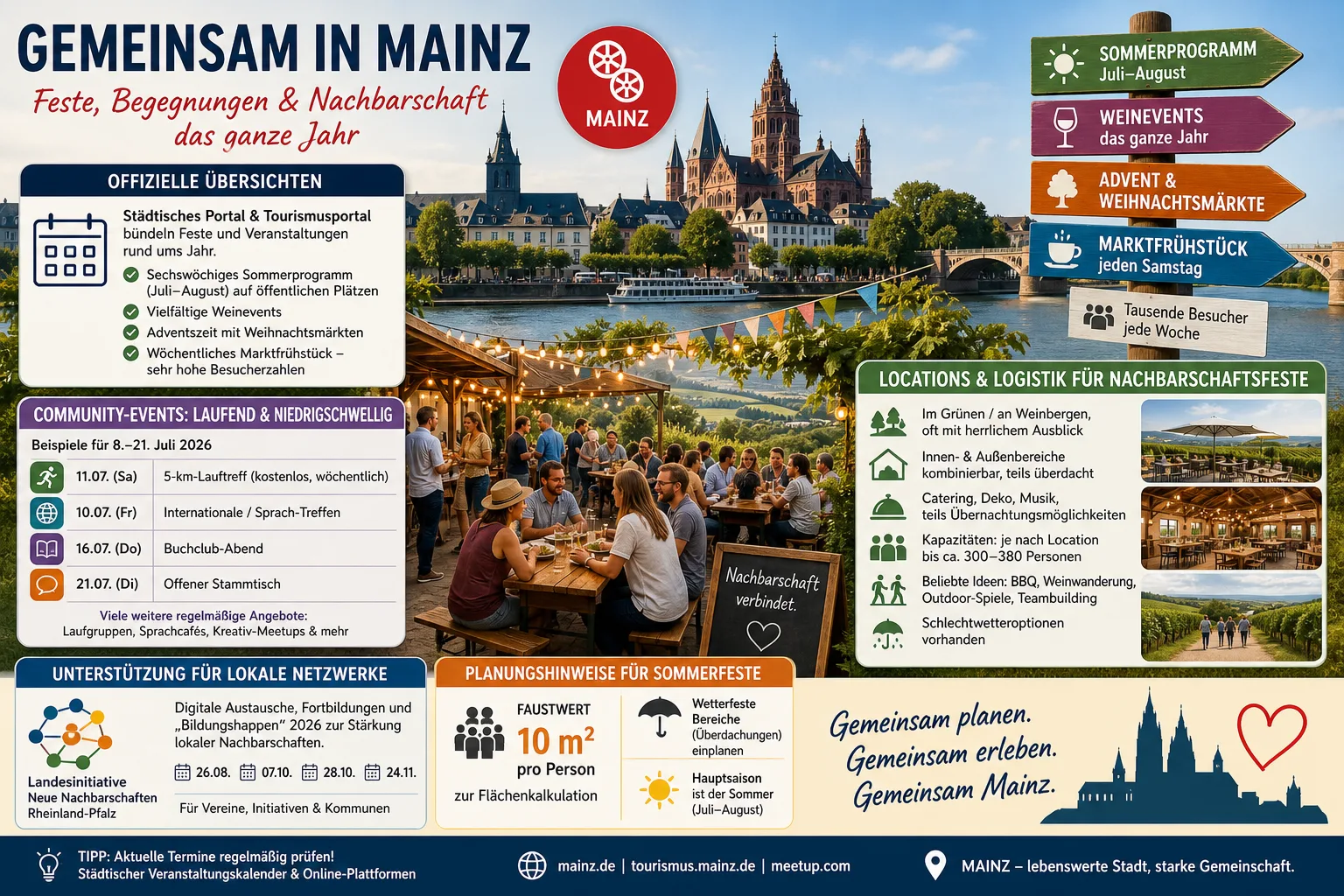
For reliable, future-oriented planning, official event calendars and established providers are the best foundation. There you will usually also find information on tickets, accessibility, travel, and current rules.
- City of Mainz: Official information, forms, and (depending on the area) overviews of dates for events and public spaces.
- mainzplus CITYMARKETING: Extensive calendar and program overviews for Mainz and the major event venues.
- Tourism Portals of the Region: Often bundled overviews for wine experiences, markets, and seasonal programs.
Practical tip: If you are planning your own festival, compare your desired time frame with the major announced dates. This way you avoid collisions (e.g., overcrowded travel, parallel stage programs) – or you can consciously use the extra attention in the city.
Which Event Formats Are Especially Suitable in the Coming Months
Without anticipating individual dates, typical formats can be expected in Mainz in the coming months that are well suited for families, circles of friends, newcomers, and neighborhoods. Always pay attention to the official announcements as soon as programs are published.
1) Neighborhood Festivals in Courtyards, Streets, or Inner Courtyards
For late summer and early autumn, classic neighborhood festivals are especially rewarding: shorter daylight hours than in midsummer, but often still stable weather. Proven are clear time frames, a central contact person, and friendly coordination with direct residents (especially due to noise in the evening).
2) Market and Square Formats (with Food, Music, Participation Stands)
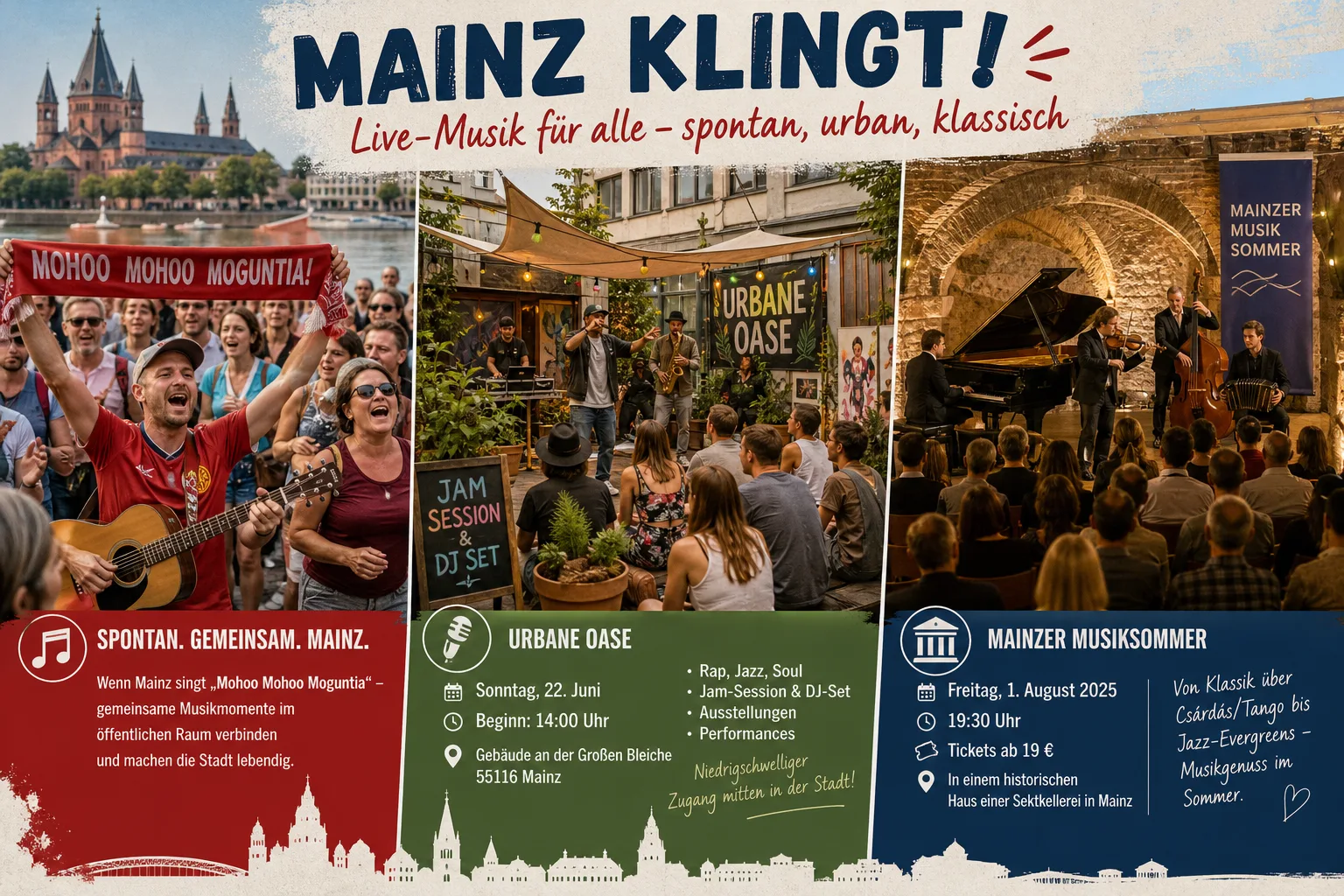
In Mainz, squares in the city center and in the districts are suitable for small encounter formats: information tables from initiatives, participation offers, small stages or acoustic acts. For everything on public space: Clarify early what requires a permit (structures, serving, sound, closures).
3) Wine & Enjoyment – Moderate and Plannable
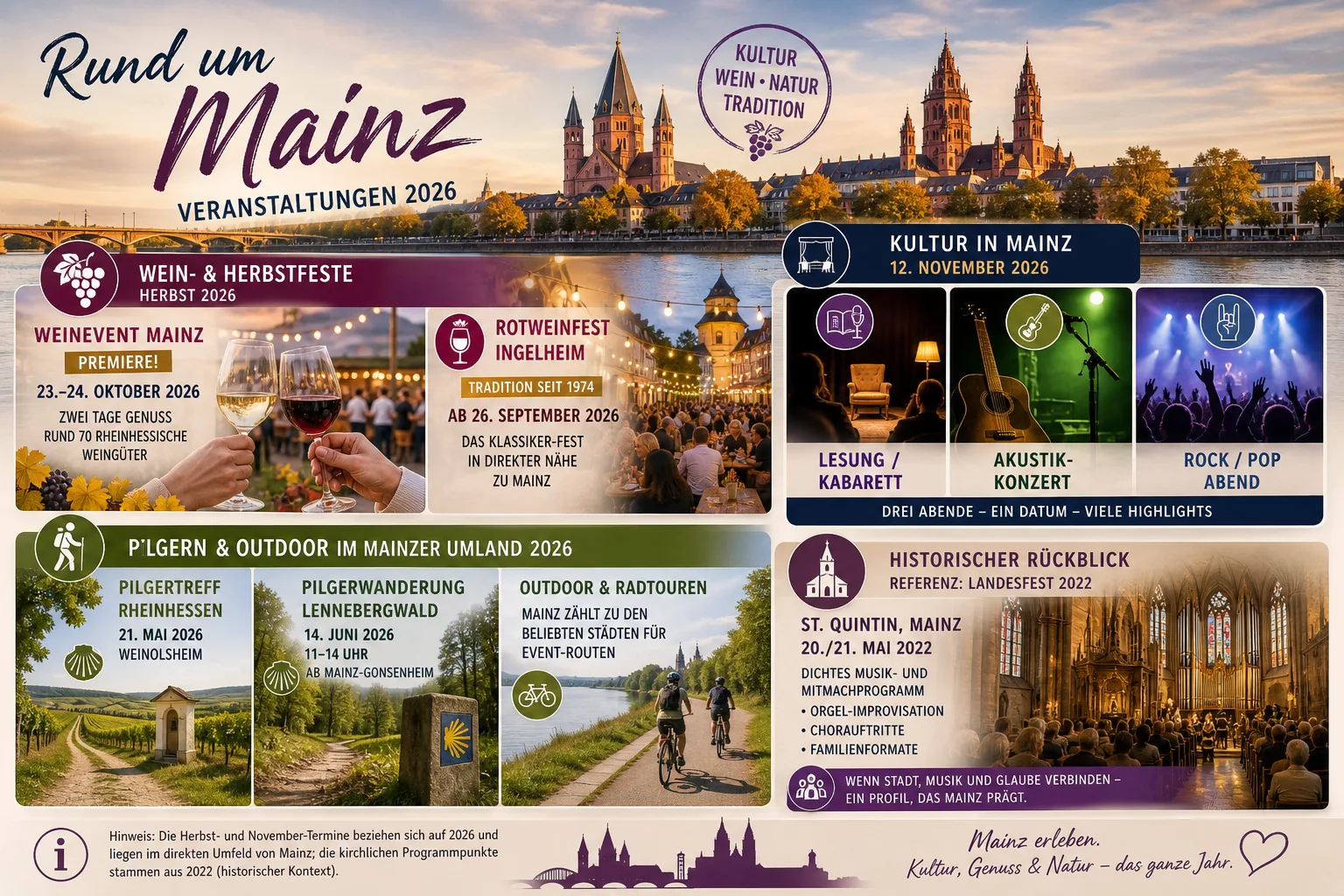
Wine-related formats will continue to be present in the region in the coming seasons. If you are planning something yourself: Rely on transparent rules (serving only to adults, visible non-alcoholic alternatives, safe ways home) and communicate this already in the invitation.
4) Running, Book, and Language Meetups with Regular Repetitions
Regular meetings are a particularly reliable bridge into the community: They are easy to organize, low-threshold, and scale well. For the next few weeks, a clear rhythm (e.g., every two weeks), a fixed meeting point, and a short netiquette (including how to deal with new participants) are suitable.
Marketplace, Rhine, Open-Air: How to Plan the Perfect Meeting Point
If you are planning an event for 2026/2027, the location and setting largely determine whether it becomes a “neighborhood” – or just a loose gathering of people. Mainz offers three particularly obvious settings, which will also play a role in upcoming programs:
- Market and city center areas for short, easily accessible meetings (ideal for “drop by” formats).
- Rhine-adjacent locations for a relaxed open-air atmosphere, especially in the early evening.
- Neighborhood locations (courtyards, club spaces, neighborhood meeting points) for a “we know each other” atmosphere.
Weather, Noise, Accessibility: Three Points You Should Plan for Now
- Weather concept: For upcoming dates, plan a clear bad weather option (e.g., covered area or alternative room) and communicate early how to proceed in case of rain.
- Noise & Times: Set an end for music/moderation that fits the surroundings, and coordinate with the neighborhood. Clear rules avoid conflicts.
- Accessibility: Check access (steps, paths), sanitary situation, and clearly visible signage. This increases participation and trust.
Organizing Yourself: Permits, Safety, Neighborhood
To ensure your neighborhood festival or community event runs smoothly in the coming months, a simple structure is worthwhile: responsibilities, safety basics, and transparent communication. Depending on the location and size, permits and requirements may become relevant – especially when using public spaces, closures, sound, structures, or serving.
Checklist for Your Event (for 2026/2027)
- Clarify location & use: Private property, club space, or public area? For public spaces, ask the city early about the correct procedure (special use, requirements, possibly traffic).
- Plan safety realistically: Keep escape and rescue routes clear, avoid tripping hazards, provide a first aid kit, designate responsible persons.
- Structures & Electricity: For tents, stages, electricity, and lighting, only use suitable, safe solutions; involve professionals if unsure.
- Serving & Youth Protection: If alcohol is provided, consistently offer non-alcoholic alternatives and ensure rules for serving minors.
- Involve the neighborhood: Invitation notes or hallway notices with times, contact, and a brief note on consideration. This creates acceptance.
- Communication: A clear starting point (e.g., joint opening), a “stress-free” program, and a clearly visible contact point on site.
For larger events, further requirements may apply, such as regulations for the operation of assembly venues and occupational safety at events. If you plan to go bigger (e.g., stage, large number of visitors, professional technology), seek professional advice early.
Fastnacht as a Driver for the Coming Season
Even though many people in Mainz first associate Fastnacht with the big highlights, it has a lasting effect as an organizational and club driver. In the coming seasons, many smaller formats benefit from know-how that is developed in clubs and volunteer teams: moderation, process planning, stage routine, fundraising, and responsible cooperation with authorities.
If you want to start a new format, it is worthwhile to contact local clubs and initiatives early. Often, this leads to collaborations that noticeably improve a neighborhood festival: technology, helpers, program contributions, or simply experience with processes.
How to Become Part of the Community in Mainz in the Next Weeks
You don't have to organize something yourself right away to get started. For the coming weeks and months, these three steps are especially practical:
- Choose a recurring format (e.g., running, language, or book meetup) and attend at least three times – community is created through repetition.
- Plan a mini-event (60–90 minutes): joint walk, picnic without music, games afternoon. Small formats are often the most sustainable.
- Bring a “participation” role: a cake, a board game, a playlist (without sound system), a short impulse. This lowers the threshold for starting a conversation.
If you want to think bigger later, set yourself a concrete goal for the coming season: a courtyard or street festival, a neighborhood flea market, or a joint action day – with a clear time, clear responsibilities, and a communication line that combines consideration and joy.